Study in Turkey

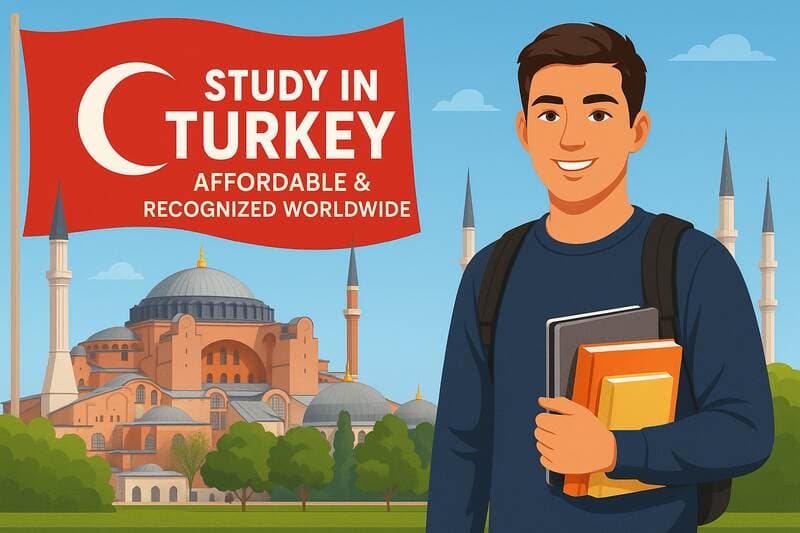
Study in Turkey: Becoming an emerging global hub for International Students. In recent years, Turkey has solidified its position as a leading destination for international students, offering a compelling combination of academic excellence, cultural diversity, and affordability. For students seeking affordable universities in Turkey for international students, the country provides globally competitive options that combine quality education with lower living and tuition costs compared to institutions in North America, Western Europe, or Australia.
A key advantage of studying in Turkey as an international student is access to English-taught degree programs across disciplines such as engineering, medicine, business, social sciences, and architecture. These programs, offered by top private and public universities in Turkey, are internationally accredited and recognized, ensuring global employability and academic progression.
Higher education institutions in Turkey have consistently ranked higher among global universities. The research output of renowned institutions such as Koç University, Sabancı Üniversitesi Istanbul, Istanbul University and Bilkent University has been recognized internationally for their industry partnerships with students and the importance of student-centered learning. Whether international students are in Istanbul or Ankara, they benefit from world-class laboratories, modern campuses and a culturally rich environment that fosters academic and personal growth.
Tuition Fees in Turkish Universities for International Students (2026 Academic Year)
One of the most attractive aspects of studying in Turkey is the cost-effective tuition fees for international students. While public universities typically charge between $1,000 to $9,000 USD per year, private Turkish universities may range from $2,000 to $37,000 USD annually, depending on the program and institution. Despite higher tuition at private institutions, students benefit from smaller class sizes, international faculty, and extensive academic resources.
Study in Turkey competitive tuition fees, combined with the availability of English-medium instruction and globally recognized degrees, position Turkey as an excellent choice for students seeking high-quality yet affordable international education.
Scholarships for International Students in Turkey
Turkey actively supports internationalization through generous scholarship schemes. Programs such as Türkiye Scholarships fully fund undergraduate and postgraduate education, including tuition, housing, health insurance, and travel costs. Universities like Koç, Sabancı, Istanbul Medipol, and Bahçeşehir University also offer merit-based scholarships for international students in Turkey.
Additional financial aid is available through regional or global initiatives, including the IsDB and Erasmus+ exchange programs, further reducing the cost of studying in Turkey and enhancing academic mobility. These scholarships reinforce Turkey’s commitment to making higher education accessible to students from developing countries and underserved regions.
Cost of Living for International Students in Turkey
The cost of living in Turkey is still relatively low, with many cities like Istanbul, Ankara, and Izmir offering student accommodation. Typically, foreign students spend around $350 to $700 per month to live in Turkey. Including accommodation, food and drink and utilities in USD.
The most cost-effective housing choices, such as university dormitories, range from $40 to $100. USD/month) and shared apartments ($150 to $300. USD/month). In university dining halls, you can enjoy healthy meals priced from $1 to $5 USD. Turkey's students can enjoy cost-effective living while enjoying comfort and modern amenities, thanks to their access to discounted public transportation and internet packages.
Student Life, Campus Culture, and Global Engagement
Beyond academics, Turkey offers an enriching cultural and social experience. International students can participate in Erasmus+ and Mevlana student exchange programs, which promote intercultural learning and enable semester-long studies in Europe or Asia.
There are active student clubs, festivals and research conferences in campuses. Integration and local involvement are promoted through Turkish language courses offered by several universities for international students. Additionally, Turkey serves as a gateway between Europe and Asia, making it an excellent destination for students who want to explore the world.
Why International Students Choose to study in Turkey
Turkey is a popular destination for international students seeking study abroad opportunities, thanks to its affordable tuition fees and world-class universities, as well as its range of degree programs taught in English. Turkey's rich cultural heritage, extensive scholarship support, and a friendly atmosphere make it ideally placed for international education. Despite the cost, students still find studying in Turkey in 2026 to be a wise and worthwhile decision.
Turkey has emerged as a prime location for international education, offering prestigious degrees, cultural attractions, and budget-friendly accommodations. Turkey's expanding network of internationally accredited universities and globally recognized programs have made studying there a more feasible and desirable option for students, as well as the ideal environment for pursuing top-quality education in an accessible and energetic manner. Listed below are five significant benefits that international students can obtain by studying in Turkey, along with the reasons why this Eurasian country is becoming increasingly important for higher education worldwide.
1. Affordable Tuition Fees and Low Cost of Living for International Students in Turkey
One of the most compelling reasons why international students choose to study in Turkey is the cost-effectiveness of higher education in the country. Compared to study destinations such as the United States, the United Kingdom, Canada, or Australia, the cost of studying in Turkey is significantly lower.
Tuition fees at public universities in Turkey range from approximately $500 to $4,000 USD per year, while private Turkish universities charge between $5,000 to $20,000 USD annually, depending on the program and institution. This affordability extends beyond academic costs. The average monthly living expenses for international students in Turkey—including accommodation, food, transportation, and personal needs—can range from $300 to $600 USD, making it one of the most budget-friendly destinations in Europe and Asia.
Moreover, many universities offer dormitory accommodation on campus or in nearby student housing, which is often subsidized or offered at reasonable rates, adding to the overall affordability of student life in Turkey.
2. Simplified Admission Requirements and Streamlined Application Process
Turkish universities tend to have a more accessible admission process for international students than their counterparts in other countries. Turkey's undergraduate admission requirements typically include a high school diploma, academic transcripts (in English or Turkish), and evidence of language proficiency (depending on the program language. Despite the presence of entrance exams or interviews, most programs are less competitive than those in North America or Western Europe.
For postgraduate studies, applicants must submit a bachelor’s degree certificate, transcripts, recommendation letters, and in some cases, a statement of purpose or a research proposal. Many universities also accept internationally recognized tests such as TOEFL, IELTS, or YÖS (a Turkish entrance exam for foreign students).
Turkey's centralized and digital application systems, such as "Study in Turkey" or "TR-YÖS", make the process efficient and accessible. In addition, many Turkish universities do not require SAT, ACT, or GRE scores, making them more attainable for students from diverse educational backgrounds.
3. Internationally Accredited Degrees and High-Quality Academic Programs
Turkey is home to an impressive number of universities that are internationally recognized and ranked in the QS World University Rankings and Times Higher Education (THE) listings. Prestigious institutions such as Koç University, Bilkent University, Boğaziçi University, and Sabancı University offer a broad spectrum of programs aligned with European Higher Education Area (EHEA) standards through the Bologna Process.
Students who graduate from Turkish universities can pursue international education or career options due to the globally recognized degrees offered by these universities. Over 150 countries enroll in English-medium courses in engineering, medicine and international relations at various universities. Other programs include architecture, business administration, computer science, and MS in economics.
Also Turkish universities are attracting students with the aim of academic excellence and global impact by investing heavily in research, innovation as well as international cooperation.
4. Cultural Diversity, Geographic Accessibility, and Unique Student Experience
Turkey’s geographic location straddling both Europe and Asia—offers a distinctive intercultural learning environment. Its rich historical heritage, diverse population, and multicultural cities make it an ideal place for international students to explore and grow.
The presence of vibrant student communities in Istanbul, Ankara, Izmir, and other metropolitan regions provides ample chances for engaging with Eastern and Western traditions. A safe and affable environment is provided to international students in Turkey, who can often be helped through the offices of international student students, peer mentoring programs, and language support services.
Turkey's direct international flights and relatively liberal visa and residency permit regulations for students make it a desirable option for study abroad.
5. Modern University Campuses and High Standards of Student Life
Turkish universities are known for offering modern, well-equipped campuses that support both academic and extracurricular pursuits. Students enjoy access to:
Advanced laboratories and research centers
Extensive digital and physical libraries
On-campus medical clinics, sports facilities, and student lounges
Technology-integrated classrooms and collaborative learning spaces
In terms of student engagement, most universities in Turkey promote a vibrant campus culture with a wide range of clubs, student unions, competitions, career fairs, and cultural events. These initiatives contribute to a well-rounded student experience, fostering leadership, creativity, and social responsibility.
Additionally, many institutions have career development centers that help students with internships, part-time jobs, and post-graduation career placement in Turkey or abroad.
Final Thoughts: Why Choose Turkey for Your Higher Education Abroad?
Choosing Turkey for higher education offers a strategic advantage for international students seeking an affordable, globally respected, and culturally enriching academic experience. With an expanding network of internationally ranked universities, accessible admission processes, and a welcoming multicultural environment, Turkey continues to emerge as a top-tier destination for international students in 2025 and beyond.
Whether you're planning to study medicine, engineering, humanities, or business, Turkish universities offer globally competitive programs that can serve as a launchpad for your international academic or professional career.
Global education has positioned Turkey as a strategic and economical choice for students from all over the world. Among the best universities in Europe, Turkey offers relatively low tuition fees and courses, as well as internationally accredited degrees and degree programs.
The cost of studying in Turkey is explained in detail by this guide, which includes information on public and private university fees, language-based tuition differences between universities, and average monthly living expenses in major student city countries.
1. Low-Cost Higher Education in Turkey for International Students
One of the most compelling aspects of studying in Turkey is its affordability compared to other international study destinations such as the United Kingdom, the United States, or Canada. The average tuition fees in Turkish universities for international students are significantly lower, while the quality of education remains competitive on a global scale.
Public Universities in Turkey: Tuition fees at public institutions typically range between $500 and $4,000 USD per academic year, depending on the degree program and the language of instruction. Programs delivered in Turkish tend to be more affordable, while English-taught programs may carry slightly higher fees. Notable public universities known for their academic excellence and affordable costs include:
Istanbul University
Middle East Technical University (METU)
Ankara University
While tuition fees are typically higher in Turkey's private universities, these schools provide students with a better education due to their more advanced facilities and smaller class sizes, which make them ideal candidates for personalized learning. Tuition in private colleges costs between $5,000 and $20,000. USD per year. Top-ranked private universities in Turkey with world-class campuses
include:
Koç University
Bilkent University
Sabancı University
These universities offer English-medium programs in fields such as medicine, engineering, architecture, business, and international relations, catering to the growing number of international students in Turkey.
2. Cost of Living in Turkey for International Students
In addition to affordable academic fees, the cost of living in Turkey for international students is remarkably low, particularly in comparison to most European and North American countries. Monthly expenses for international students are highly manageable, allowing them to enjoy a comfortable and enriching lifestyle without financial strain.
Here is an estimate of the average monthly expenses in major Turkish cities such as Istanbul, Ankara, and Izmir:
Expense Category | Average Monthly Cost (USD) |
|---|---|
Student Housing (shared) | $100 – $250 |
Food and Groceries | $100 – $150 |
Public Transportation | $20 – $40 |
Utilities and Internet | $30 – $60 |
Personal & Leisure Expenses | $50 – $100 |
Total Estimated Cost | $300 – $600/month |
Many universities offer subsidized dormitories or partner with affordable private housing providers, further reducing living costs. Additionally, international students are eligible for discounted transportation passes in most cities, making daily commuting inexpensive and convenient.
3. Additional Financial Considerations and Scholarships
To further support international students, many Turkish universities and government organizations provide a wide range of scholarships based on academic merit, financial need, or country of origin. These include:
Türkiye Scholarships (Turkiye Burslari): A government-funded program covering full tuition, accommodation, health insurance, and a monthly stipend.
University-specific merit scholarships: Offered by institutions such as Istanbul Aydın University, Bahçeşehir University, and Yeditepe University.
Special discounts for international students enrolling through study-abroad agencies or educational partnerships.
These scholarships significantly reduce the net cost of study in Turkey, making it one of the most affordable destinations for quality international education in 2025.
4. High Return on Investment for International Students in Turkey
Although Turkey has some of the lowest tuition and living costs in the country, it doesn't lower academically. Turkish universities are often members of global educational systems, such as the Bologna Process, which allows for the recognition of credits and degrees in various regions of Europe and other countries. The increase in graduate mobility and employability is beneficial, particularly for students who want to pursue careers or further education in other countries.
Furthermore, students studying in Turkey gain access to:
Multilingual degree programs (in English, Turkish, and increasingly Arabic)
International exchange programs like Erasmus+
Internships and job placement support through university career centers
This combination of affordability, international recognition, and career support makes studying in Turkey a valuable long-term investment for global learners.
Final Thoughts: Is Studying in Turkey Worth It Financially?
International Students can choose from Turkey as one of the best value-for-money destinations for study abroad, making it a top pick. A modern academic atmosphere is provided to students through low cost of living, scholarship opportunities, and university fees in a country that boasts hospitality and cultural richness. This location between Europe and Asia makes it an ideal place for them to study.
International students can study in Turkey without compromising their educational quality due to the affordable tuition fees, regardless of their desired field of study-medicine or engineering or social sciences. As of 2025, Turkey is a country that remains popular among students who want to explore global opportunities without spending disproportionate amounts of money.
Private universities in Turkey are increasingly popular among international students who want to pursue modern and global-oriented higher education, as a result of the growing demand for quality education worldwide. By offering internationally accredited degree programs, English-medium instruction and world class campus facilities, these institutions are a competitive advantage over expensive universities in the United States, the UK, or Western Europe.
This article provides a detailed overview of the benefits of studying at private Turkish universities, tuition costs, academic offerings, and why these institutions are uniquely positioned to serve the needs of international students in 2026.
1. World-Class Academic Standards and English-Taught Programs
One of the most distinguishing features of top private universities in Turkey is their commitment to academic excellence and internationalization. Many of these institutions are ranked in global university listings such as the QS World University Rankings and Times Higher Education (THE), reflecting their growing academic reputation.
Notable private universities in Turkey include:
Koç University: known for its strong programs in business, engineering, and medicine
Sabancı University: offering interdisciplinary education with a strong research focus
Bilkent University: one of Turkey's leading private institutions with a global alumni network
These universities offer a wide range of undergraduate and postgraduate programs in English, making them especially appealing for international students who may not be proficient in Turkish. Fields of study include computer science, international relations, architecture, economics, biomedical sciences, and artificial intelligence, among others.
2. Student-Centered Education and Personalized Learning Environment
A key advantage of private universities in Turkey is their student-focused approach to education. Unlike larger public institutions, private universities typically maintain smaller class sizes, which allows for:
Greater interaction with professors and academic advisors
Customized academic support
Enhanced classroom engagement
Opportunities for mentorship and research collaboration
This educational model aligns with international teaching standards and fosters critical thinking, creativity, and innovation, preparing students for global careers or advanced academic pursuits.
3. Global Partnerships and International Exchange Opportunities
Many best private Turkish universities maintain strategic partnerships with prestigious universities worldwide, enabling students to benefit from:
Exchange programs with institutions in Europe, North America, and Asia
Dual degree programs with partner universities
Participation in Erasmus+ and other international mobility initiatives
These collaborations allow international students studying in Turkey to expand their global academic exposure and even spend a semester or year abroad, further enhancing their credentials and cross-cultural competencies.
4. Modern Campuses and Advanced Learning Facilities
Private universities in Turkey are known for their investment in cutting-edge infrastructure and campus resources. Students have access to:
State-of-the-art laboratories and research centers
Smart classrooms and digital learning platforms
On-campus housing, sports complexes, and cultural centers
Comprehensive libraries and innovation hubs
These facilities provide students with a conducive learning environment and promote holistic development beyond the classroom.
5. Tuition Fees and Return on Investment for International Students
While tuition fees at private Turkish universities are higher than those at public institutions, they remain significantly more affordable than universities in Western countries. The average tuition fees for international students at private universities in Turkey typically range from $5,000 to $20,000 USD per year, depending on the program and institution.
In return, students gain access to:
Internationally recognized degrees
High employability through internship and career support services
Opportunities for scholarships or tuition discounts (especially for top academic performers or early applicants)
This favorable cost-to-quality ratio makes private Turkish universities a smart investment for international students aiming for high-quality education without incurring massive student debt.
6. Scholarships and Financial Support for International Students
To enhance accessibility, many private universities in Turkey offer generous scholarships based on merit, financial need, or nationality. These may include:
Full or partial tuition waivers
Accommodation discounts
Performance-based annual renewals
Institutions like Istanbul Bilgi University, Yeditepe University, and Istanbul Aydın University have scholarship programs tailored specifically for international students, making it easier to manage the cost of studying abroad.
Why International Students Are Choosing Private Universities in Turkey
The combination of academic excellence, global engagement, and affordability in private universities makes Turkey a top choice for international students in 2026. They offer world-class education at lower cost than traditional Western destinations, with modern campuses, English-taught courses and small class sizes, as well as strong connections to the global academic community.
The private universities in Turkey provide students with a stimulating, global university experience that allows them to thrive and succeed in an increasingly competitive international world.
Public universities in Turkey continue to attract international students seeking high-quality education at affordable tuition fees. Known for their academic excellence and cultural richness, institutions such as Istanbul University, Middle East Technical University (METU), and Ankara University offer a broad range of undergraduate and postgraduate programs across fields like engineering, medicine, social sciences, and the arts.
One of the most appealing aspects of public universities in Turkey is their low tuition cost for international students, typically ranging between $500 and $4,000 USD per year. Programs taught in Turkish are generally more affordable, while English-taught options may have slightly higher fees.
These universities combine affordability with strong academic standards, modern facilities, and inclusive campus environments. Their diverse student populations provide international learners with meaningful cultural exchange and a supportive atmosphere.
Study Opportunities in Turkey: Medicine, Engineering, Business, and More
Turkey has become a popular destination for international students interested in fields such as medicine, dentistry, engineering, business administration, and international relations. With its globally recognized degrees, modern universities, and reasonable cost of study, Turkey offers an accessible and rewarding academic experience in these high-demand disciplines.
Top Academic Programs in Turkey for International Students: Study Medicine, Engineering, Business, and More in 2025
With low tuition fees of studying in Turkey, world-class academic degrees and programs, Turkiye continues to emerge as a leading destination for international education. Turkey offers world-class opportunities for students who want to study medicine, dentistry, engineering, business administration, or international relations, as well as a diverse range of cultural experiences.
A comprehensive guide to the top degree programs in Turkey for international students, covering everything from tuition fees and university recommendations to key benefits. Scroll down to read more...
1. Study Medicine in Turkey for International Students
Studying medicine in Turkey is increasingly popular among international students seeking high-quality medical education at an affordable cost. Turkish medical universities are known for their modern hospitals, internationally trained faculty, and English-medium MBBS programs.
Key Highlights:
Top Universities:
Hacettepe University (Ankara)
Istanbul University - Cerrahpaşa Faculty of Medicine
Marmara University (English Track)
Tuition Fees: Medical program tuition in Turkey ranges between $6,000 to $15,000 USD per year, significantly lower than in countries like the U.S. or U.K., where costs can exceed $50,000 USD annually.
Why Choose Turkey for Medical Studies? Students benefit from early clinical exposure, modern teaching hospitals, and hands-on medical training. The integration of European and Middle Eastern medical practices, due to Turkey’s unique geographic and cultural location, enhances the overall academic experience.
2. Study Dentistry in Turkey: Affordable and Practical Education
Dentistry is another highly valued field of study in Turkey, offering international students a balanced mix of theory and practical training in advanced dental clinics.
Key Highlights:
Top Universities:
Istanbul University Faculty of Dentistry
Ege University (Izmir)
Ankara University Faculty of Dentistry
Tuition Fees: Dentistry programs typically cost $5,000 to $15,000 USD per year, making Turkey a cost-effective alternative to the U.K., U.S., and Canada.
Program Features: Students receive comprehensive training in dental sciences, including prosthodontics, orthodontics, and oral surgery. The availability of English-language programs ensures accessibility for non-Turkish speakers.
3. Study Engineering in Turkey: Innovation Meets Affordability
Engineering programs in Turkey are known for their strong emphasis on research, technology, and innovation. Turkey offers undergraduate and graduate degrees in civil, mechanical, electrical, software, and computer engineering—all of which are in high global demand.
Key Highlights:
Top Universities:
Middle East Technical University (METU)
Koç University
Sabancı University
Istanbul Technical University (ITU)
Tuition Fees: Annual fees range from $4,000 to $15,000 USD, offering exceptional value compared to engineering programs in Europe or North America, where fees can surpass $40,000 USD.
Why Study Engineering in Turkey? Engineering students benefit from cutting-edge laboratories, industry partnerships, internship programs, and international exchange opportunities through Erasmus+ and other networks.
4. Study Business Administration in Turkey: Learn in the Heart of Global Commerce
Turkey's strategic location and dynamic economy make it an ideal place to pursue a degree in business administration, finance, marketing, or entrepreneurship.
Key Highlights:
Top Universities:
Boğaziçi University (Istanbul)
Istanbul University Faculty of Economics
Yeditepe University
Bahçeşehir University
Tuition Fees: Business-related degrees cost between $3,000 and $15,000 USD annually, far less than similar programs in the U.S. or Canada (where fees can exceed $30,000 USD).
What Makes Turkey a Business Education Hub? Students studying business in Turkey gain insight into both Eastern and Western markets, benefit from faculty with global industry experience, and enjoy proximity to multinational companies based in Istanbul, a regional economic center.
5. Study International Relations in Turkey: A Geopolitical Advantage
Given Turkey’s unique position at the crossroads of Europe, Asia, and the Middle East, studying international relations, political science, or global diplomacy in Turkey offers an unparalleled perspective.
Key Highlights:
Top Universities:
Kadir Has University
Istanbul Bilgi University
Ankara Yıldırım Beyazıt University
Tuition Fees: Programs range from $4,000 to $12,000 USD per year, which is highly affordable when compared to Western institutions that may charge upwards of $25,000 USD annually.
Why Study IR in Turkey? International relations students benefit from access to embassies, NGOs, international organizations, and conferences. Many programs incorporate internships, fieldwork, and multilingual instruction, preparing students for careers in diplomacy, international law, or academia.
Choosing the Right Study Program in Turkey
Whether you're aspiring to become a doctor, engineer, business leader, or diplomat, Turkey offers a wide array of internationally recognized academic programs at a fraction of the cost of traditional Western study destinations. With its modern universities, English-language options, scholarship opportunities, and vibrant student life, Turkey continues to attract thousands of students globally in 2025.
As an international student, selecting Turkey as your study destination provides not only a solid academic foundation but also an immersive cultural experience in one of the most historically and geographically significant countries in the world.
Why Choose Turkey for Higher Education? Benefits of Studying in Turkey for International Students in 2025
The increasing competition for global education has led to international students seeking destinations that combine academic excellence, cultural attractions, and affordability. All of these criteria and more make Turkey a great study destination.
The academic opportunities and cost-effectiveness of studying in Turkey make it a top choice for international students seeking prestigious degrees from one of the world's most historically and strategically important regions.
1. Affordable Cost of Education and Living in Turkey for International Students
One of the most compelling reasons to study in Turkey is its affordability. Compared to popular destinations such as the United Kingdom, the United States, or Australia, tuition fees and living expenses in Turkey are significantly lower, without compromising the quality of education.
University tuition fees typically range from $3,000 to $15,000 USD annually at private institutions and $500 to $4,000 USD at public universities.
Monthly living expenses including accommodation, food, transport, and personal costs average between $300 and $600 USD, making Turkey one of the most budget-friendly study abroad destinations in 2025.
This cost-effectiveness enables students to pursue world-class education while maintaining financial stability throughout their academic journey.
2. Internationally Accredited and English-Taught Academic Programs
Turkey is home to over 200 universities, many of which are ranked in the QS World University Rankings and Times Higher Education (THE) listings. Institutions such as Koç University, Bilkent University, Middle East Technical University (METU), and Boğaziçi University are renowned for their academic rigor and research output.
A wide range of English-medium programs are offered at both undergraduate and postgraduate levels.
Popular fields include medicine, engineering, business administration, international relations, and computer science.
The availability of English-taught degree programs ensures accessibility for international students from non-Turkish-speaking backgrounds, while degrees are recognized across Europe and beyond, thanks to Turkey’s alignment with the Bologna Process.
3. Scholarships and Financial Aid for International Students in Turkey
Turkey offers numerous scholarships for international students, including the prestigious Türkiye Scholarships (Turkiye Burslari), which cover:
Full tuition fees
Monthly living stipend
Free accommodation
Health insurance
Turkish language course
Many private universities also provide merit-based scholarships and tuition discounts, further reducing the financial burden for academically strong candidates. These initiatives reflect Turkey’s commitment to expanding its global education network.
4. Strategic Location and Unique Cultural Exposure
Situated at the crossroads of Europe and Asia, Turkey offers a truly multicultural environment that blends Eastern and Western influences. This geographical and cultural diversity allows students to:
Experience rich historical and architectural heritage, from the Ottoman and Byzantine Empires to the modern Republic
Participate in vibrant student life in dynamic cities like Istanbul, Ankara, and Izmir
Engage with peers from over 160 countries, fostering a global network
Students studying in Turkey not only gain academic knowledge but also develop intercultural communication skills, global awareness, and personal growth.
5. Modern Campus Facilities and Supportive Student Services
Turkish universities invest heavily in modern infrastructure, including:
High-tech laboratories and research centers
Digital libraries and smart classrooms
Student dormitories, cafeterias, and sports facilities
Career development offices, mentorship programs, and internship placements
International students are supported through dedicated international offices, which assist with visa procedures, orientation programs, language support, and integration into campus life.
Is Turkey the Right Study Destination for You?
For students seeking a high-quality, globally recognized education in a culturally rich and affordable setting, Turkey offers one of the most well-rounded international education experiences in 2025. With its low cost of living, modern universities, English-language programs, and generous scholarships, Turkey is increasingly being recognized as a top choice among international students worldwide.
Whether you plan to pursue medicine, business, engineering, or social sciences, studying in Turkey provides both academic excellence and a transformative cultural journey making it a destination worth considering for your future.
As global competition for international students intensifies, Turkey has increasingly positioned itself as an attractive alternative to traditional destinations such as the United Kingdom and the European Union. While each region offers unique educational advantages, a detailed comparison highlights key distinctions in tuition costs, academic quality, cultural integration, and career pathways.
1. Affordability: Tuition Fees and Cost of Living
One of the most compelling reasons international students choose Turkey is the affordability of both tuition and daily living expenses. Private universities in Turkey typically charge between $3,000 and $15,000 annually, significantly lower than fees in the UK, where undergraduate programs often exceed £20,000 (roughly $25,000 USD). While some EU countries, such as Germany, offer tuition-free education at public institutions, living expenses in cities like Berlin or Paris can still place financial strain on international students.
In Turkey, however, the cost of living remains relatively low. Students can comfortably cover accommodation, food, and transportation on a modest budget, especially when compared to the higher living standards required in the UK and many EU countries. This affordability makes Turkey a financially viable option without compromising the overall student experience.
2. Academic Reputation and Teaching Standards
Turkey has made substantial investments in higher education over the past two decades. Leading universities like Koç University, Sabancı University, and Istanbul Technical University are internationally recognized and increasingly featured in global university rankings. These institutions offer modern campuses, updated curricula, and a growing number of English-taught programs tailored to international students.
In comparison, the UK and EU are home to some of the most prestigious universities in the world—such as Oxford, Cambridge, and ETH Zurich. These institutions are known for their cutting-edge research, extensive alumni networks, and academic legacy. While Turkish universities are still catching up in global rankings, they provide excellent value in terms of the quality-to-cost ratio and continue to improve in research output and international partnerships.
3. Cultural Diversity and Student Life
Turkey’s unique geographic location—straddling Europe and Asia—creates a culturally rich environment unlike anywhere else. From ancient ruins to bustling bazaars, and from Ottoman palaces to modern art galleries, students in Turkey are immersed in a setting that combines Eastern traditions with Western lifestyles. This exposure to a hybrid culture enhances intercultural competence, an increasingly important skill in global careers.
In contrast, the UK and EU also offer diverse cultural experiences, but these are often more regionally or nationally specific. A student in Germany might experience a vastly different cultural environment than one in Spain or the Netherlands. While the UK is known for its multicultural cities, the cultural narrative is generally more Western in character, offering less contrast than what is found in Turkey.
4. Graduate Outcomes and Career Prospects
Turkey’s strategic location and expanding economy make it an emerging hub for students interested in regional economics, diplomacy, and international trade. The country’s growing startup scene and increasing foreign investment open up a variety of internship and career opportunities, particularly for students in business, engineering, and international relations.
However, the UK and EU still maintain a competitive edge when it comes to graduate employability and global job networks. With strong ties to multinational corporations, especially in cities like London, Paris, and Amsterdam, graduates often find broader opportunities in finance, technology, law, and academia. In some cases, Turkish degrees may need additional recognition for specific professional pathways in Europe or North America.
Conclusion
Choosing between studying in Turkey, the EU, or the UK ultimately depends on each student’s priorities. For those seeking a more affordable, culturally immersive, and rapidly developing educational environment, Turkey stands out as an exceptional choice. Meanwhile, students aiming for globally recognized degrees and extensive professional networks may still favor the UK or EU. Understanding the trade-offs between cost, quality, and future opportunities is essential in making an informed decision.
1. How much do international students pay in tuition fees at Turkish universities?
Tuition fees for international students in Turkey are highly competitive compared to many other countries. On average, fees range between $3,000 and $15,000 annually, depending on the university and chosen program. Fields such as medicine and engineering usually fall at the higher end of the spectrum, while social sciences and humanities programs tend to be more affordable.
2. Are degrees from Turkish universities recognized internationally?
Yes, many Turkish universities are recognized on a global scale. Leading institutions like Koç University, Sabancı University, and Middle East Technical University (METU) maintain international accreditations and are listed in major university rankings. Their degrees are widely respected by employers and graduate schools across Europe, North America, and Asia.
3. How do Turkish universities rank worldwide?
Turkey is home to a number of institutions that perform well in global rankings such as the QS World University Rankings and Times Higher Education (THE). Universities like Koç, METU, and Bilkent consistently place in the top 500 globally, reflecting their commitment to academic excellence, research, and innovation.
4. What academic programs are available to international students in Turkey?
Turkish universities offer a broad spectrum of programs at the undergraduate, master's, and PhD levels. Popular fields include medicine, dentistry, business, international relations, architecture, and various branches of engineering. Many of these programs are taught entirely in English, catering specifically to international students.
5. What are the general admission requirements for international applicants?
Admission requirements vary by university, but most require the following:
Completed online application form
High school diploma or equivalent
Proof of English proficiency (TOEFL, IELTS, or equivalent if the program is in English)
A motivation letter or personal statement
In some cases, a university-specific exam or an interview may be required
6. Is student accommodation easily available in Turkey?
Yes. Most universities offer on-campus dormitories, and there are abundant private housing options near campuses, including shared apartments and student residences. Accommodation is generally more affordable than in many Western countries, especially in cities outside Istanbul.
7. What is the average monthly cost of living for a student in Turkey? Living expenses in Turkey are relatively low. On average, students spend between $300 and $600 per month, which covers housing, food, transportation, and other daily needs. The actual cost will vary depending on lifestyle and the city of residence.
8. Are scholarships available to international students studying in Turkey? Yes, several funding options exist. Many universities offer merit-based scholarships, and the Türkiye Scholarships Program, run by the Turkish government, is one of the most comprehensive covering full tuition, accommodation, monthly stipends, and even health insurance for eligible students.
9. Can international students work while pursuing their studies in Turkey? International students are allowed to work part-time, but they must obtain a work permit from the relevant Turkish authorities. Some universities assist students in finding on-campus jobs or internships that align with their field of study and schedule.
10. What language are university programs taught in?
While a growing number of programs, especially at private universities and postgraduate levels, are taught in English, many undergraduate courses at public institutions are delivered in Turkish. Prospective students should confirm the language of instruction for their desired program. Even for English-taught programs, learning basic Turkish can significantly enhance the student experience in daily life.