Study in the UK


To study in the UK is still one of the top dreams for international students in 2026. The United Kingdom remains home to some of the best universities in the world, combining academic excellence, cultural diversity, and career opportunities. Every year, thousands of students from Asia, Africa, the Middle East, and Latin America apply because UK degrees are globally recognized and open doors in almost every country.
Studying in the UK means access to modern laboratories, world-class professors, strong industry connections, and an environment that encourages innovation and research. From medicine in the UK, to business, engineering, social sciences, and arts, international students can find programs designed to prepare them for leadership roles in a global job market.
Study in the UK Fees and Cost of Living in 2026
Understanding study in the UK fees is the first step in planning.
Undergraduate programs: £11,400 to £38,000 per year.
Postgraduate taught degrees (Master’s): £9,000 to £30,000 per year.
Medical degrees: £34,000 to £70,000 annually.
Cost of living in the UK for international students depends on location:
London: around £1,300 to £1,400 per month.
Other cities: £900 to £1,300 per month.
This includes accommodation, food, transportation, utilities, and leisure. Additional costs like Immigration Health Surcharge (IHS) and visa fees must also be included in student budgets.
While costs are higher compared to other countries, the value of UK education and strong graduate employment rates make it worth the investment.
Best Universities in the UK for International Students
The UK’s higher education system mixes tradition with innovation.
University of Oxford & University of Cambridge: globally top-ranked, strong in humanities, sciences, and medicine.
Imperial College London: leading in engineering, business, and technology.
University College London (UCL): renowned for research and international community.
University of Edinburgh & University of Manchester: strong teaching and student life.
Warwick & King’s College London: excellent employability and career services.
These universities in the UK attract international students with academic prestige, international recognition, and active student support.
Studying Medicine in the UK
For many, the goal is to study medicine in the UK.
Duration: 5–6 years for MBBS or equivalent.
Admission requirements: UCAS application, high academic grades, and aptitude exams (UCAT or BMAT).
Tuition fees for international students: £34,000 to £70,000 per year.
Recognition: Degrees accredited by General Medical Council (GMC), allowing graduates to practice medicine in the UK and abroad.
Medical students benefit from clinical placements in world-class hospitals, ensuring strong practical experience alongside theory.
Scholarships to Study in the UK for International Students
One way to reduce the study in the UK cost is through scholarships:
Chevening Scholarships: Fully funded for outstanding international students.
Commonwealth Scholarships: Available for students from Commonwealth countries.
GREAT Scholarships: Government-funded, offered in partnership with UK universities.
University-specific scholarships: Offered by Oxford, Cambridge, UCL, and many others.
Scholarships may cover tuition fees, living costs, flights, and even health insurance.
Admission Process in the UK: Public vs Private Options
The study in the UK admission process is competitive but clear.
Public universities use UCAS for undergraduate applications, requiring high grades, personal statements, and references.
Postgraduate students apply directly to universities with academic transcripts and research proposals.
Private colleges and pathway providers offer flexible routes, including foundation or pre-master’s courses, with more relaxed requirements.
For international students, this provides multiple entry routes into the UK system.
UK Student Visa and Immigration
To study in the United Kingdom, students need a Tier 4 (Student Route) visa:
Proof of admission from a licensed UK university.
Proof of financial support and accommodation.
Payment of Immigration Health Surcharge (IHS).
Valid passport and academic documents.
The visa allows full-time study and limited part-time work rights. Processing time usually takes 3–6 weeks.
Part-Time Jobs for International Students in the UK
One way to manage the study in the UK cost is through part-time jobs.
Students can work up to 20 hours per week during term and full-time during holidays.
Jobs are available in retail, hospitality, tutoring, and internships.
Universities also offer on-campus work opportunities.
Part-time jobs not only provide extra income but also help students gain UK work experience.
Cultural Life and Student Experience in the UK
The UK offers more than just academics:
London, Manchester, Edinburgh, Birmingham are vibrant multicultural cities with strong student communities.
Student societies and clubs support integration and personal growth.
Museums, theatres, music festivals, and sports events enrich student life.
Students experience a truly global culture with classmates from over 150 countries.
For many, the chance to live in a multicultural, English-speaking environment is one of the main reasons to study in the UK for international students.
Why Apply Early to UK Universities
Early application is key for international students.
More chances to secure a place in top universities.
Higher availability of scholarships.
Enough time for visa and financial preparation.
Avoiding last-minute stress.
Students who apply through UCAS before January deadlines have the best chance of securing places in competitive programs.
International Recognition and Accreditations
Degrees from the UK are highly respected worldwide.
Engineering Council UK accreditation for engineering degrees.
AACSB, EQUIS, AMBA accreditation for business schools.
GMC approval for medical programs.
This global recognition makes UK graduates highly employable in international job markets.
Why Study in the UK Instead of Other Destinations?
Home to top-ranked universities worldwide.
Strong scholarships and funding opportunities.
Degrees recognized and respected internationally.
Access to career networks and global employers.
Multicultural, safe, and welcoming environment.
For students searching for the best country to study abroad, the UK continues to be one of the most reliable choices in 2026.
To study in the UK is more than earning a degree it is about investing in a life-changing experience. From world-class universities, global recognition, and strong career opportunities, to cultural diversity and student life, the UK offers everything international students need.
While study in the UK fees and living costs are higher than in some countries, the return on investment is unmatched. Graduates leave with skills, connections, and qualifications that open doors worldwide.
For 2026, the United Kingdom remains one of the best destinations for international students who want quality, prestige, and opportunity all in one place.
Planning your education journey to study in the UK requires a clear understanding of tuition fees, living expenses, and mandatory costs. This detailed guide breaks down the financial commitments involved for international students, helping you budget wisely for a successful academic experience in the United Kingdom.
1. Undergraduate Tuition Fees for International Students in the UK
Typical Range: £11,000 to £23,000 per academic year for full-time undergraduate programs.
Prestigious Institutions & Specialized Courses: Fees can rise to between £28,000 and £42,000 annually, particularly at Russell Group universities, Oxbridge colleges, and select London universities.
Medicine and Dentistry Programs: These intensive courses cost significantly more, ranging from approximately £32,000 to £68,000 per year due to advanced clinical training and facility usage.
2. Postgraduate Tuition Fees for International Students in the United Kingdom
Master’s Degree Programs: Generally fall between £8,500 and £29,000 per year, varying by university and discipline.
MBA and Executive Programs: Elite business schools charge between £33,000 and £62,000 for one-year intensive MBAs, reflecting their international ranking and professional accreditations.
Research Degrees (MPhil, PhD): Typical annual fees range from £14,000 to £26,000, with laboratory or clinical research programs sometimes exceeding these figures.
3. Estimated Living Expenses for International Students in the UK
London (Highest Cost Area)
Monthly Budget: £1,150 to £1,450
Accommodation and Utilities: £680 – £1,050
Food and Essentials: £160 – £240
Local Transport: £90 to £160
Miscellaneous: £100 – £210
Regional Cities (e.g., Manchester, Birmingham, Glasgow, Cardiff)
Monthly Budget: £780 to £1,050
Accommodation and Utilities: £480 – £720
Food and Essentials: £130 to £230
Local Transport: £50 – £110
Miscellaneous: £70 – £160
4. Additional Mandatory Fees and Costs
Immigration Health Surcharge (IHS): Approximately £780 per year of visa duration (paid in advance).
UK Student Visa Application Fee: Roughly £495 (subject to changes).
Tuition Fee Deposit: Typically ranges between £1,800 and £4,500, required before a Confirmation of Acceptance for Studies (CAS) is issued.
Initial Expenses on Arrival: Estimated between £900 and £1,600, covering housing deposits, essential supplies, and travel.
Summary: Budgeting for Your UK Education Journey
Those who want to study in the UK must have an understanding of the entire financial landscape. Why is this so? Premium fees for medicine and business programs are subject to significant variation depending on course, university type (and level of study). Despite differences in living expenses between London and other regional cities, planning effectively can ensure affordability. Moreover, your budget should encompass required fees like the Immigration Health Surcharge and visa expenses.
Taking care to plan ahead can allow international students to begin their education in the UK, with no worries of financial strain as they explore different subjects.

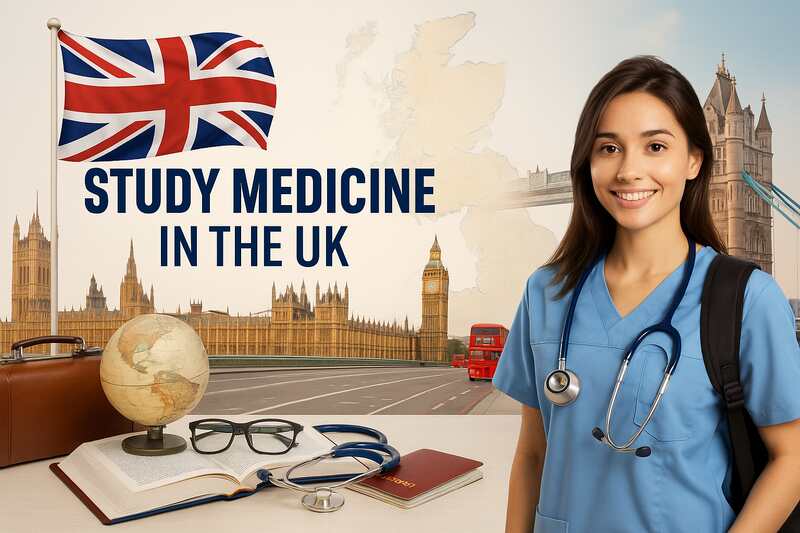
Medicine remains one of the most prestigious and rigorously regulated fields of study in the United Kingdom, attracting a significant number of international students each year. The cost of studying medicine in the UK for international students reflects both the high academic standards and the extensive clinical training required.
Duration and Program Structure
Undergraduate medical degrees, commonly referred to as an MBBS or a MRCB B.Com, usually take five to six years. On the other hand, graduate-entry programs are often designed to be completed in four years, and may be suitable for students who have already completed a related undergraduate degree. Both of these programs combine fundamental medical sciences with rapid and sustained clinical exposure. Students undertake extensive rotations in NHS-affiliated hospitals and participate in simulated clinical skills labs to prepare for practical use.
Tuition Fees for International Medical Students
The UK medical school fees for international applicants in 2025 vary widely depending on the institution. Prestigious medical schools such as Cambridge, Oxford, and University College London (UCL) typically charge between £40,000 and £70,000 per academic year. Other accredited institutions may offer tuition fees ranging from approximately £25,000 to £45,000 annually. These fees account for the cost of access to specialized clinical training facilities, hospital partnerships, and resources critical for medical education.
Accreditation and Eligibility
All UK medical degrees must receive accreditation from the General Medical Council (GMC), the statutory body responsible for regulating medical education and practice in the UK. Graduates from GMC-approved medical programs are eligible to enter the UK Foundation Programme and pursue licensure exams necessary for clinical practice within the UK and internationally.
Admission Requirements and Language Proficiency
Admission to medical schools in the UK is highly competitive and typically requires high academic achievement, including relevant science qualifications and satisfactory scores on admission tests such as the UKCAT or BMAT. International applicants must also demonstrate English language proficiency through standardized tests like IELTS, TOEFL, or PTE.
This comprehensive overview aims to assist prospective international students seeking detailed information on the study medicine in the UK for international students cost, the UK medical school fees for international applicants in 2025, and the importance of enrolling in GMC recognised medical schools UK.
The United Kingdom remains a premier destination for international students seeking world-class higher education. With more than 160 universities, the UK’s academic institutions range from elite research-intensive universities to highly ranked modern universities offering flexible admission pathways. This diversity ensures that students worldwide can find programs aligned with their academic goals, budget, and career aspirations.
1. Russell Group Universities – Research Excellence and Global Recognition
The Russell Group comprises 24 leading UK universities renowned for their research output, academic excellence, and strong employer connections. These institutions dominate global university rankings and offer programs that attract thousands of international students each year.
University of Glasgow: A historic institution excelling in life sciences, engineering, and business studies, offering cutting-edge research facilities and comprehensive student support.
University of Sheffield: Known for its robust engineering, architecture, and health sciences faculties, Sheffield combines research innovation with an inclusive campus environment.
University of Leeds: A leader in social sciences, health, and performing arts, Leeds offers vibrant student life alongside excellent employability rates.
University of Bristol: Highly regarded for science, technology, and medical research, Bristol fosters an interdisciplinary approach to learning and innovation.
University of Southampton: A key player in oceanography, engineering, and computer science, with extensive industry partnerships for internships.
2. Top-Ranked UK Universities Outside the Russell Group
Beyond the Russell Group, several UK universities maintain strong global rankings and attract international students with more accessible admission standards and competitive study in the UK fees.
University of Exeter: Recognized for its strengths in environmental sciences, business, and humanities, Exeter offers excellent research opportunities and scholarship options for international students.
University of Reading: Known for agriculture, finance, and meteorology programs, Reading boasts modern campuses and strong industry links.
University of Sussex: Excelling in social sciences, psychology, and international relations, Sussex emphasizes interdisciplinary learning and global perspectives.
University of East Anglia (UEA): A leader in environmental science and creative writing, UEA provides personalized support for international applicants.
3. Universities Offering Flexible Admissions and International Student Support
Many UK universities are popular with authorized education agencies due to their supportive admissions policies tailored for international students, including foundation year programs and conditional offers without mandatory English test scores in some cases. These institutions often offer lower tuition fees compared to Russell Group universities, providing value for international students aiming to study in the UK affordably.
University of Sunderland: Offers a range of foundation courses and career-focused programs with affordable tuition fees and excellent student services.
Liverpool John Moores University: Known for strong computing, sports science, and business faculties, with comprehensive support for overseas students.
Sheffield Hallam University: Provides practical-oriented courses and modern facilities, with flexible entry requirements for international learners.
De Montfort University (DMU): A growing university with strengths in art and design, health, and engineering, committed to inclusive education.
4. Prestigious Business Schools with Triple Accreditation
For international students seeking world-class management education, UK business schools with AACSB, EQUIS, and AMBA accreditation represent the pinnacle of academic excellence and global recognition.
Cranfield School of Management: Renowned for its MBA and executive education programs with strong links to the aerospace and manufacturing industries.
Strathclyde Business School: Based in Glasgow, offering a highly ranked MBA and MSc programs with global networking opportunities.
Alliance Manchester Business School: One of the oldest business schools globally, offering internationally respected finance, marketing, and leadership programs.
Understanding university accreditation and program recognition is vital for international students planning to study in the UK. Accreditation assures quality education standards, global acceptance of qualifications, and enhances graduates’ career mobility worldwide. The UK higher education sector is supported by rigorous accreditation frameworks across disciplines, ensuring transparency and reliability for students from all regions.
1. Institutional Accreditation and Quality Assurance in the UK
All universities in the United Kingdom operate under strict quality assurance mechanisms governed by the Quality Assurance Agency for Higher Education (QAA). The QAA evaluates institutions’ governance, academic standards, and student experience to maintain national education quality. This foundational institutional accreditation guarantees that degrees from UK universities meet recognized academic standards globally.
Examples: Universities such as University of Glasgow, University of Bristol, and University of Reading have successfully undergone QAA reviews, assuring prospective international students of their academic rigor.
2. Specialized Program Accreditations for International Recognition
Beyond institutional accreditation, individual academic programs pursue professional accreditations relevant to their fields. These accreditations are crucial for students seeking UK degrees internationally accredited and professional licensure after graduation.
Business and Management Accreditation
Business schools strive to achieve the prestigious “Triple Crown” accreditation AACSB, EQUIS, and AMBA. These globally recognized certifications reflect superior curriculum quality, faculty expertise, and strong industry connections. For example:
Alliance Manchester Business School and Warwick Business School hold triple accreditation, making their MBA and MSc programs highly valued by employers worldwide.
Engineering and Technology Accreditation
Engineering programs align with standards set by the Engineering Council UK through the Accreditation of Higher Education Programmes (AHEP) frameworks. Professional institutions such as the Institution of Engineering and Technology (IET) and the Institution of Mechanical Engineers (IMechE) accredit specific courses, facilitating graduates’ progression towards becoming Chartered Engineers (CEng).
Universities such as University of Sheffield and University of Southampton offer ABET-accredited and Engineering Council-recognized programs, ensuring international professional recognition.
Health and Allied Professions Accreditation
Healthcare degrees must comply with the standards set by statutory regulatory bodies:
General Medical Council (GMC) accredits medical degrees, essential for licensure in the UK and many other countries.
Nursing and Midwifery Council (NMC) oversees nursing and midwifery education.
Health and Care Professions Council (HCPC) regulates allied health profession programs.
Medical schools like University of Edinburgh and Imperial College London maintain GMC accreditation, assuring international students of the quality and acceptance of their medical qualifications globally.
3. International Quality Indicators and University Rankings
Besides accreditation, international students often rely on membership in academic networks and global university rankings as indicators of education quality and institutional reputation.
The European University Association (EUA) membership signifies adherence to European higher education standards and fosters collaboration.
Global ranking platforms such as QS World University Rankings and Times Higher Education (THE) provide comprehensive metrics on research impact, teaching quality, and international outlook.
Universities like University College London (UCL) and University of Edinburgh regularly feature in top global rankings, attracting students seeking internationally competitive education.
4. How to Verify UK University Accreditation Internationally
International students are encouraged to verify the accreditation status of UK universities and their programs before applying. Reliable sources include:
The QAA website for institutional quality assurance reports.
Official university websites detailing professional accreditations.
Professional bodies’ directories, such as the GMC’s list of recognized medical schools.
Third-party platforms like UCAS and government education portals.
This due diligence ensures the qualification’s validity both within the UK and in students’ home countries, enabling smooth academic and professional progression.
Deciding to study in the UK is a major step, and our official agency ensures a smooth, 100% free admission process with complete transparency—no hidden fees, no scams. We partner directly with accredited UK universities, providing authentic university admission, visa support, and post-arrival assistance.
How We Guarantee Transparency and Safety
No application or hidden charges. Our services are entirely free for students.
Official offer letters come directly from UK universities.
Clear disclosure of tuition fees, living costs, and admission timelines.
Written agreements with UK institutions prove our authorized status.
Comprehensive Free Services for International Students
Fast, reliable UK university admission guidance and application handling.
Expert support with the UK Student Visa (Tier 4) application and document preparation.
Assistance with on-campus or private accommodation booking.
Help obtaining the Biometric Residence Permit and local registration.
Pre-departure briefings, airport pickup, and orientation to UK culture and NHS registration.
Ongoing academic counselling, work permit advice, and support opening UK bank accounts and National Insurance Number applications.
Why Choose Us for Your UK Study Journey?
We are committed to empowering international students from application to graduation with ethical, fully authorized, and student-focused services. Join thousands of successful students who trusted our free and transparent support to make their dream of studying in the United Kingdom a reality.
How much does it cost to study in the UK for international students in 2025?
Tuition fees vary by program and university. Undergraduate courses typically range from £13,000 to £32,000 annually, while postgraduate tuition usually falls between £10,000 and £32,000 per year, depending on the field of study and institution prestige.
What is the process for obtaining a UK Student Visa for international students?
International students must secure a Confirmation of Acceptance for Studies (CAS) from a licensed UK university. Applicants need to prove financial capability, pay the Immigration Health Surcharge, complete a visa application, and provide biometric data as part of the process.
Can international students work while studying in the UK?
Yes, most UK student visas allow part-time employment during academic terms (usually up to 20 hours per week) and full-time work during holidays, subject to visa conditions.
Which UK universities are considered the best for international students?
Globally recognized universities like University of Oxford, University of Cambridge, Imperial College London, University College London (UCL), University of Edinburgh, and University of Manchester lead the rankings. Additionally, many regional universities offer excellent support and career opportunities for international students.
Are UK degrees internationally recognized?
Absolutely. Degrees from UK universities hold global recognition. Many programs carry professional accreditations, such as from the General Medical Council (GMC), Engineering Council UK, and AACSB for business schools, enhancing graduate mobility worldwide.
Do I need to submit IELTS scores to apply for UK universities?
Most UK institutions accept IELTS, PTE, or TOEFL scores as proof of English proficiency. However, some universities provide pre-sessional English courses or waive language test requirements under specific conditions.
How long do master’s programs in the UK usually last?
The majority of taught master’s degrees are one-year full-time programs, offering an accelerated path to employment or further research opportunities.
What are the typical living expenses for international students in the UK?
Monthly living costs range from approximately £850 to £1,350, with London being more expensive. Expenses include rent, food, transportation, utilities, and academic materials.
Is studying medicine in the UK expensive for international students?
Yes, medical degrees are among the priciest courses, with fees typically between £38,000 and £75,000 per year, reflecting the cost of clinical placements and specialist resources.
What scholarship opportunities exist for international students in the UK?
International applicants can apply for prestigious awards such as the Chevening Scholarships, Commonwealth Scholarships, university-specific grants, and funding from research councils.
How do international students apply for undergraduate courses in the UK?
Applications are usually submitted via the UCAS system, which requires a personal statement, academic references, and official transcripts.
Are foundation or pathway programs available for international applicants?
Yes, many UK universities and affiliated colleges offer foundation courses designed to prepare international students for degree-level study.
What is the difference between applying through UCAS and direct university applications?
UCAS is the centralized platform for most undergraduate applications. Postgraduate applications are generally submitted directly to the university.
Can international students bring family members to the UK?
Dependents may accompany certain visa holders, usually those enrolled in longer courses. Eligibility depends on visa type and program duration.
How can I verify the accreditation status of a UK university?
Check official university websites, national accreditation bodies like the Engineering Council, GMC, AACSB, or consult the UK NARIC/ENIC database for international recognition.
Is healthcare accessible for international students in the UK?
Yes. Most international students pay the Immigration Health Surcharge with their visa application, which grants access to NHS healthcare services during their studies.
Are medical programs in the UK taught in English?
All UK medical courses are delivered in English and include early clinical exposure with placements in NHS hospitals.
How competitive is admission to Russell Group universities for international students?
Entry is highly competitive, requiring excellent academic results, strong personal statements, and sometimes additional tests or interviews.
What documents are required for a UK student visa application?
Applicants must provide their CAS, valid passport, proof of funds, tuberculosis test results (if applicable), English language evidence, and biometric information.
How long does it take to receive a decision on a UK student visa?
Processing times vary by country and time of year, but decisions generally take between 3 to 8 weeks. Early application after receiving the CAS is recommended.