Studying Medicine in Turkey: Everything International Students Need to Know in 2026

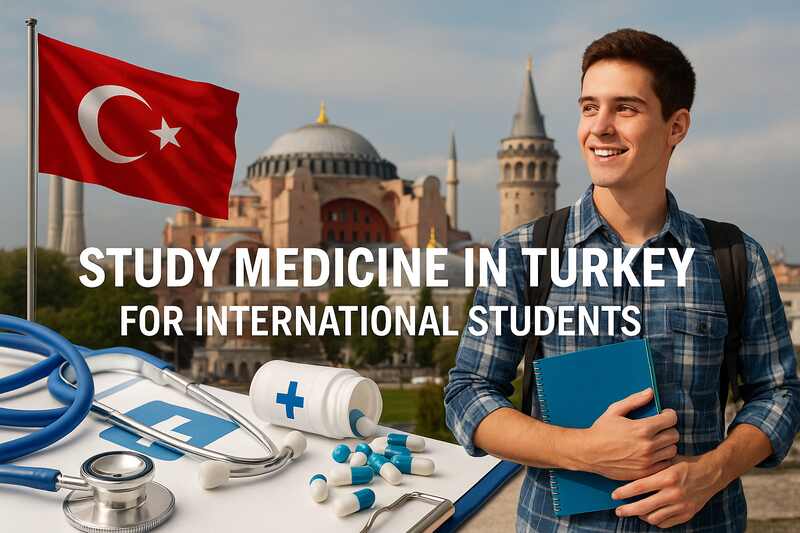
Studying medicine in Turkey has moved well past being a "budget alternative" for students who couldn't get in elsewhere. Based on our analysis of 2025-2026 enrollment data, YÖK records, and verified university fee structures, Turkey now hosts one of the most internationally accessible medical education systems in Europe and the wider region. Over 185,000 international students are enrolled across Turkish universities in total, and medical programs in Istanbul, Ankara, and Izmir are a significant part of that figure.
This guide covers what the degree actually is, how the six years are structured, what admission looks like for the 2026-2027 intake, what it costs, and what happens after graduation. Every section is based on verifiable data, not promotional language.
What Degree Do You Graduate With?
The medical degree in Turkey is called Tip Doktoru, which translates directly as Doctor of Medicine. It's the Turkish equivalent of the MBBS or MD qualification. Not a lesser credential. Not a certificate. A full medical degree.
Turkish medical schools are listed in the World Directory of Medical Schools (WDOMS) and approved by both WHO and WFME. That listing is what matters for international licensing, because ECFMG eligibility for USMLE (USA) and GMC eligibility for PLAB (UK) both depend on WDOMS recognition. Graduates from accredited Turkish programs can, and regularly do, apply for residency positions in the US, UK, Germany, and other countries after clearing the relevant licensing exams.
One important update for the 2026 intake: as of January 2026, USMLE exam registration for international medical graduates moved from ECFMG directly to FSMB, so the process now runs across two portals. ECFMG handles certification, FSMB handles exam scheduling. Students targeting USMLE should factor this administrative change into their timeline planning.
How the Six Years Are Structured
The standard program duration is six years. Some students end up spending seven, usually because they need a one-year English preparatory course before Year 1 starts, or in some cases a science foundation year. But six years is the norm for students who enter with the required language and science background.
A published study in the International Journal of Medical Education (Demiral Yilmaz et al., 2020, doi: 10.5116/ijme.5e47.d7de) examined international medical students at Ege University School of Medicine in Turkey and found the adaptation process was manageable but required deliberate preparation in language and cultural orientation during the first year. Worth knowing if you're planning your first semester.
Here's how the six years actually break down:
Years 1-3: Pre-Clinical Sciences. The first three years are primarily classroom and laboratory-based. Core subjects include Anatomy, Physiology, Biochemistry, Histology, Pharmacology, Pathology, and Microbiology. Students also work through cadaver dissections, simulation lab sessions, and early practical assessments. Turkish medical schools sit under YÖK supervision, and a 2021 study published in PMC analyzing data from 25 Turkish medical schools confirmed that academic standards across programs are consistent with European medical education benchmarks.
Years 4-5: Clinical Rotations. From Year 4, students rotate through major hospital departments: Internal Medicine, General Surgery, Pediatrics, Obstetrics and Gynecology, Psychiatry, Neurology, Orthopedics, and Family Medicine. Turkey's large urban teaching hospitals see high patient volumes across a wide range of conditions, which means the diversity of clinical exposure is genuinely useful. Turkey integrates patient contact earlier than several comparable destinations, so students aren't just observing, they're participating under supervision.
Year 6: Internship. The final year is a full working internship. Students function as intern doctors in wards, emergency departments, and outpatient clinics. This year is mandatory for graduation and for YÖK denklik (degree equivalency) registration. By the time it's complete, graduates have had real, supervised clinical responsibility, not just observational hours.
Can You Study Medicine in Turkey Without IELTS?
Yes. This is one of the most searched questions about studying medicine in Turkey, and the short answer is: most private universities do not require IELTS or TOEFL as a hard admission condition.
The usual process at private universities is one of two options. Either you sit the university's internal English proficiency test before enrollment, or you join a one-year English preparatory program first. Students who pass the internal exam go straight into Year 1. Students who need the prep year gain an extra 12 months to settle in, learn basics of Turkish, and adjust academically before the heavy science content starts. A number of students in our analysis of past intakes have actually found the prep year a practical advantage rather than a delay.
Public universities are more demanding on this point and may require documented language proficiency. But for most international students, the private university pathway is the realistic route, and that pathway doesn't require IELTS.
Admission Requirements for the 2026-2027 Intake
Academic criteria: Private universities generally require a high school diploma with at least 70% in science subjects (Biology, Chemistry, Physics, sometimes Mathematics). Higher grades improve your placement at more competitive programs. TEPDAD-accredited schools with stronger USMLE and PLAB outcome records tend to be more selective even within the private sector.
Entrance exams: For public universities, the YÖS (Yabanci Uyruklu Ogrenci Sinavi, the Foreign Student Exam) is the primary route. Some also accept SAT, ACT, or IB scores. Private universities typically skip standardized entrance exams for foreign applicants and evaluate based on transcripts, a motivation letter, and sometimes a short interview.
Application window for September 2026 intake: Deadlines at most private universities fall between April and July 2026. Early application matters, particularly for English-medium programs in Istanbul where seats fill quickly. A secondary February 2027 intake exists at some universities, but available seats are fewer and not all programs participate.
Documents typically required:
Valid passport copy
High school diploma with certified translation
Academic transcripts
English proficiency evidence (internal test or IELTS/TOEFL, depending on university)
Personal statement / motivation letter
Recommendation letters (some universities, not all)
Ministry of Education equivalency certificate (denklik from the Turkish Ministry)
Public vs Private: Which Is the Practical Route?
This question comes up constantly in our admissions analysis, and the data is clear.
Public universities in Turkey charge between $2,000 and $10,000 per year, which is genuinely low. But the YÖS exam is competitive, most programs are taught in Turkish, and international seats are limited. For a student who doesn't have strong Turkish and isn't prepared to sit a national entrance exam, public universities are not a realistic first option.
Private universities cost more but are built for international enrollment. English-medium tracks, simplified documentation processes, internal English tests, and bilingual support during clinical years. For 2026-2027, English-medium tuition at reputable Istanbul private medical schools runs as follows:
Atlas University: approx. $17,825 - $25,000 per year
Biruni University: approx. $22,500 per year
Altinbas University: approx. $22,000 per year
Uskudar University: approx. $22,000 - $24,000 per year
Istanbul Medipol University: approx. $20,000 - $25,000 per year
Istinye University: approx. $29,000 per year
Bahcesehir University (BAU): approx. $28,000 per year
Acibadem University: approx. $28,000+ per year (direct access to the Acibadem hospital network)
Living costs in Istanbul run approximately $500 to $800 per month, covering accommodation, food, transport, and daily expenses. Ankara and Izmir tend to be slightly cheaper on living costs, closer to the $400 to $600 range.
All tuition figures are approximate for 2026-2027. Confirm current fees directly with each university before applying.
Is the Academic Load Manageable?
Honestly, no medical program is easy. Turkey is not an exception. The pre-clinical years involve dense scientific content with frequent written exams and practicals. Clinical years mean long hospital shifts and OSCE (Objective Structured Clinical Examination) assessments. The language factor adds a specific layer of difficulty for international students: even in fully English-medium programs, clinical years require at least basic Turkish because you're communicating with real patients in Turkish hospitals.
A systematic review published in Medical Science Educator (Nishimura et al., Springer, 2024) - which followed PRISMA guidelines and analyzed 20 peer-reviewed studies across MEDLINE and EMBASE - found that language competence in patient interaction remains the single most consistent challenge for international medical graduates transitioning into clinical settings. The finding holds across English-speaking host countries, but the underlying pattern is directly relevant to Turkey too: students who arrive in clinical rotations without functional patient-communication skills consistently report lower clinical confidence, more supervisory friction, and slower adjustment during the internship year. Investing in conversational Turkish before Year 4 is not optional for students who want a smooth clinical experience. It's part of the degree.
That said, Turkish medical graduates do go on to pass USMLE and PLAB, specialize in Turkey through the TUS exam, and build active careers across Europe, North America, and the Gulf. The degree opens real doors. But only if students take the language component as seriously as the science.
Post-Graduation: Your Options After Graduating in Turkey
Specialization in Turkey (TUS exam): Graduates who want to specialize in Turkey must pass the TUS (Tip Uzmanlik Sinavi), the national medical specialization exam. This requires YÖK denklik approval of your degree, C1-level Turkish proficiency via a TÖMER certificate, and a competitive TUS score. Fields like Cardiology, Neurosurgery, and Plastic Surgery are high competition. Family Medicine and some regional specialties are more accessible. Turkey's growing medical tourism sector means specialty training here has genuine career value, particularly in surgical fields.
International licensing (USMLE / PLAB / FMGE): Graduates targeting USMLE need their Turkish university to be listed in WDOMS with ECFMG eligibility, then pass USMLE Steps 1 and 2 CK, obtain the ECFMG certificate, and apply for residency through ERAS. Turkish graduates do this every cycle. For PLAB (UK), the route is GMC registration following PLAB 1 and PLAB 2. For Indian students, FMGE or NExT is required before practicing in India. Each pathway has its own timeline, so students should map out their target exam schedule from Year 1 rather than Year 6.
Staying in Turkey: Foreign graduates of Turkish medical universities can, under specific licensing conditions and with proper denklik approval, practice medicine in Turkey. This is not automatic and requires Turkish proficiency, but the pathway exists, which makes Turkey different from most other affordable study destinations where graduates are expected to move abroad after graduating.
Quick Cost Reference: 2026-2027
Category | Range |
|---|---|
Public university tuition | $2,000 - $10,000/year |
Private university tuition (English) | $15,300 - $44,000/year |
Living costs (Istanbul) | $500 - $800/month |
Living costs (Ankara/Izmir) | $400 - $600/month |
Figures approximate for 2026-2027. Always confirm with the institution directly.
Final Assessment
Studying medicine in Turkey works best for students who approach it with clear goals, realistic expectations about language, and a licensing exam strategy in place before they arrive. The degree is real and internationally recognized. The clinical training in major Turkish teaching hospitals provides genuine exposure across a wide range of conditions. And the cost structure, particularly at private universities, remains significantly lower than UK, Australian, or US equivalents.
For the 2026-2027 intake, students should target applications between April and July 2026 for the September intake window. English-medium seats at the better-known Istanbul programs are competitive and do fill. Early preparation, accurate documentation, and a clear YÖS or internal exam strategy are what separates students who enroll on time from those who end up deferred to the following year.


The first thing international students need to understand about medical education costs in Turkey is that there isn't one answer. There are two completely different systems, public and private, and they serve different student profiles. Mixing them up is one of the most common mistakes in early-stage research.
Public Universities: Low Fees, High Competition
Public medical faculties in Turkey are government-subsidised, and that shows in the pricing. For international students, annual tuition on English-medium tracks generally falls between $2,000 and $10,000. Programs delivered entirely in Turkish can drop lower still, sometimes to $1,500 to $6,000 per year. By any regional benchmark, these are exceptional value for a WHO-recognized MD degree.
But the cost advantage comes with a real trade-off. Admission to public medical schools is highly competitive, and the barrier for international applicants is significant. Entry typically requires strong results in the YÖS (Yabanci Uyruklu Ogrenci Sinavi, the Foreign Student Exam), or in some cases an equivalent international score such as SAT or IB. Academic records need to be well above average. English-medium seats are limited and fill quickly. For most international students, particularly those from South Asia, Africa, or the Arab world, public university medicine is a realistic option only with careful preparation and often a gap year dedicated to exam readiness.
Historic public institutions like Istanbul University Cerrahpasa, Hacettepe University in Ankara, and Ankara University continue to attract strong international applicants. Their English-medium tracks carry real academic weight, and the tuition, often listed in Turkish Lira at the equivalent of a few thousand dollars annually, makes them the most cost-efficient route to a Turkish MD. The entry process is just demanding.
Private (Foundation) Universities: More Accessible, Higher Cost
Private medical universities, referred to in Turkey as foundation universities, represent the majority of what international students actually enroll in. They're built for international intake. Modern campuses, well-equipped simulation labs, university hospital affiliations, multilingual administrative support, and admission processes that don't require YÖS or standardized entrance exams. The trade-off is tuition, which runs significantly higher.
For the 2026-2027 academic year, verified English-medium tuition fees at private Turkish medical schools are as follows:
University | Annual Tuition (English-medium) |
|---|---|
Istanbul Medipol University | $40,000 - $44,000 |
Yeditepe University | approx. $33,750 - $45,000 |
Acibadem University | approx. $36,000 |
Bahcesehir University (BAU) | approx. $27,000 - $28,000 |
Istinye University | approx. $26,400 - $29,000 |
Halic University | approx. $24,000 |
Uskudar University | approx. $22,000 - $24,000 |
Istanbul Aydin University | approx. $22,000 - $24,000 |
Altinbas University | approx. $21,250 - $22,000 |
Biruni University | approx. $21,000 - $22,500 |
Okan University | approx. $22,500 |
Lokman Hekim University | approx. $15,200 - $22,500 |
Atlas University | approx. $17,825 - $20,700 |
Istanbul Health and Technology University | approx. $16,000 |
Atilim University (Ankara) | approx. $16,500 |
All figures are approximate for 2026-2027. Always confirm current fees directly with the university before applying. Some universities list discounted rates alongside standard fees; the figures above reflect published standard fees.
A few universities in this list are worth specific mention. Istanbul Medipol University runs one of the largest university hospital networks in Turkey, with the International School of Medicine as its flagship English-medium program. The $44,000 annual fee places it at the top of the private sector in Turkey, but the clinical exposure through its affiliated hospitals is among the best in the country. Acibadem University's direct connection to the Acibadem hospital group, one of Turkey's leading private hospital networks with JCI accreditation, is similarly significant for clinical training quality. Biruni University sits at the more accessible end of the private market, specifically focused on health sciences (Medicine, Dentistry, Pharmacy), which keeps its clinical infrastructure concentrated and relevant.
The IELTS Question and Private University Admissions
One of the most searched aspects of studying medicine in Turkey is whether IELTS is required, and for private universities, the answer is generally no. Most private medical schools don't mandate IELTS or TOEFL as a hard condition for international applicants. Instead, they offer one of two routes: an internal English proficiency test before enrollment, or a one-year preparatory English program if the student doesn't pass the internal test.
This makes private university medicine in Turkey accessible to students from regions where IELTS testing infrastructure is limited, or where exam fees and preparation are a barrier. The preparatory year, so worth treating seriously rather than as a formality. Students who use that year to also build basic Turkish conversational ability are significantly better prepared for the clinical years, where patient interaction happens in Turkish regardless of the program's official teaching language.
For private universities that do ask for English documentation, internal exams or a simple interview are normally sufficient. YÖS is not required at most private schools.
Scholarships for the 2026-2027 Intake
Partial scholarships are more common at private Turkish medical schools than most prospective students realize, though full scholarships for medicine are rare and very competitive. Universities like Istanbul Medipol and Bahcesehir have been known to offer 25% to 50% tuition reductions for strong applicants, particularly those with high SAT or IB scores. These aren't always advertised openly, so asking about scholarship eligibility directly during the application process is the right approach.
For students targeting a government-funded scholarship, Turkiye Burslari (Turkey Scholarships), administered by the YTB (Presidency for Turks Abroad and Related Communities), covers full tuition, accommodation, and a monthly stipend at selected Turkish universities. It's competitive, with thousands of applications per cycle, but it's the most realistic route to full funding for medicine in Turkey. Applications for the 2026-2027 Turkiye Burslari cycle typically open in late winter to early spring. Students should monitor the official Turkiye Burslari portal for exact dates.
Cost of Living: What the Fee Tables Don't Show
Tuition is only part of the picture. Living costs in Turkey vary significantly by city, and students who plan only around tuition figures often end up underprepared for the full annual spend.
Istanbul is the most expensive student city, and most English-medium medical programs are based there. Realistic monthly living costs in Istanbul for an international medical student, covering accommodation, food, transport, utilities, and daily expenses, fall between $500 and $800. Shared apartments are more common and more cost-effective than on-campus housing at private universities, which don't always operate dormitories.
In Ankara and Izmir, monthly living costs tend to be somewhat lower, roughly $400 to $600. Smaller cities like Kayseri, Samsun, or cities where some public medical programs are based can be even more affordable.
Beyond the monthly baseline, students should also budget for: residence permit (ikametgah) fees, health insurance, Turkish language course fees if they want to build language skills before clinical years, and course materials. These hidden costs are not large individually, but together they can add $1,000 to $2,000 to annual expenses if not planned for.
Putting It Together: What the Numbers Mean
Based on our analysis of 2026-2027 data, a realistic annual budget for an international student studying medicine at a mid-range private university in Istanbul, covering tuition plus full living costs, falls between $25,000 and $35,000 for most programs. At premium institutions like Medipol or Acibadem, the total annual figure rises toward $45,000 to $50,000 when living costs are included.
That's still significantly below what a comparable year of medical study costs in the UK (where tuition alone runs £38,000 to £58,000), Australia, or the United States. For students who want internationally recognized clinical training in a major European-adjacent city, at a fraction of Western costs, Turkey's private medical sector represents a genuinely competitive option for the 2026-2027 intake.
When considering where to study medicine in Turkey, international students have an impressive selection of both private and public universities. Many of these institutions now offer English-medium medical programmes, while others deliver instruction in Turkish with bilingual support. Below are ten of the most established and popular universities for international medical students in Turkey, with particular emphasis on the four institutions most frequently promoted by agencies: Istanbul Medipol University, Bahçeşehir University, Üsküdar University, and Biruni University.
Istanbul Medipol University
Istanbul Medipol University is widely regarded as one of the flagship private universities for medical education in Turkey. Its International School of Medicine delivers a 100% English-medium programme, a rarity among Turkish universities where mixed tracks are more common. Tuition fees are among the highest in the country, reaching approximately 44,000 USD per year, but this investment provides students with access to an enormous clinical network through Medipol’s affiliated hospitals. Students begin their hospital exposure early and benefit from highly modern facilities, research opportunities, and experienced faculty. Medipol is therefore considered one of the best universities to study medicine in Turkey for students who prioritize English instruction and extensive clinical practice.
Bahçeşehir University (BAU)
Another prominent name is Bahçeşehir University, often abbreviated as BAU. Its Faculty of Medicine offers an English-medium track with tuition fees around 28,000 USD per year. BAU has invested heavily in laboratory facilities, simulation centers, and international collaborations. Located in Istanbul, it attracts a diverse student population and provides strong academic support services for foreign students. The university is also known for its global network (BAU Global), which facilitates exchanges and clinical placements in other countries. For those who want a balance between quality education and more moderate tuition compared to Medipol, BAU stands as a compelling choice.
Üsküdar University
Üsküdar University offers both English and Turkish tracks in its Faculty of Medicine. Tuition fees for the English programme are about 24,000 USD per year, while the Turkish-medium track is somewhat cheaper. Üsküdar distinguishes itself by integrating medicine with health sciences and psychology, reflecting the university’s origins as a leading institution in mental health. This interdisciplinary approach, combined with accessible fees compared to some other Istanbul privates, makes Üsküdar one of the more affordable private options for international students seeking a complete medical education in Turkey.
Biruni University
Biruni University is often highlighted as one of the most cost-effective private universities in Istanbul for medical studies. Annual tuition fees for the English track vary between 15,000 and 25,500 USD, depending on intake year and scholarships. Despite its lower tuition compared to premium institutions, Biruni is entirely focused on health sciences, offering faculties of Medicine, Dentistry, and Pharmacy. Its specialization in healthcare ensures that medical students are trained in a highly concentrated academic environment with access to modern labs and teaching hospitals. For students looking for a cheaper university in Turkey to study medicine without compromising too much on quality, Biruni is an attractive candidate.
Acıbadem Mehmet Ali Aydınlar University
Acıbadem University is another prestigious private institution in Istanbul, strongly connected with the Acıbadem Healthcare Group, one of Turkey’s largest hospital chains. Tuition fees are generally in the upper private range, often exceeding 28,000 USD per year. The university’s strength lies in its direct integration with Acıbadem hospitals, which are renowned for advanced technology and high patient volumes. This integration ensures outstanding clinical training and research opportunities. For international students, Acıbadem represents a premium medical education environment, comparable to global private institutions.
Altınbaş University
Altınbaş University is a newer but rapidly growing private university in Istanbul, also offering medicine in English. Tuition fees typically fall within the 15,000 to 25,000 USD per year bracket, making it competitive in terms of affordability among private institutions. The university has gained popularity with international students due to its modern facilities, active recruitment of foreign applicants, and accessible admission criteria. For many students, Altınbaş strikes a balance between cost, quality, and the advantages of studying in Istanbul.
Koç University
Koç University is one of the most prestigious foundation universities in Turkey, with a medical school that operates entirely in English. While tuition fees are among the highest, Koç’s reputation for academic rigor, research output, and strong faculty makes it a world-class institution. Admission is highly competitive, requiring excellent grades and strong English proficiency. Students at Koç benefit from advanced laboratories, small-group teaching, and opportunities for international research collaboration. It is particularly suited for students aiming at postgraduate study or careers abroad, given its strong global recognition.
Istanbul University – Cerrahpaşa
Istanbul University’s Cerrahpaşa Faculty of Medicine is one of the oldest and most respected medical schools in Turkey. It is a public university, which means tuition fees are dramatically lower than at private institutions. English-medium tracks are available, with fees quoted in Turkish Lira that equate to only a fraction of private tuition costs. However, competition for admission is extremely fierce, and students must present strong academic results along with entrance exam scores. Cerrahpaşa is renowned for its academic tradition, large alumni network, and highly reputable teaching hospitals.
Hacettepe University
Located in Ankara, Hacettepe University consistently ranks among the top universities in Turkey for medicine. It is a public institution with an English track, charging moderate tuition fees far below those of private universities. The Faculty of Medicine is particularly respected for its research output, breadth of clinical specialties, and reputation in both Turkey and abroad. Gaining admission is challenging, but for those who succeed, Hacettepe provides a first-class medical education at relatively low cost.
Ankara University
Another important public option is Ankara University, also located in the capital. It offers an English-medium medical track and charges moderate fees, making it more affordable than private schools. The university benefits from being embedded in Ankara’s large healthcare system, giving students excellent clinical exposure. Its long history and strong reputation in medical sciences further consolidate its position as one of the best public universities to study medicine in Turkey.
Final Note
These ten institutions collectively represent the spectrum of opportunities available for international students who want to study medicine in Turkey. At the top end, universities such as Istanbul Medipol and Koç University provide premium, English-medium programmes with world-class facilities but at very high tuition fees. At the more affordable end, Biruni, Üsküdar, and Altınbaş offer quality medical training at lower costs. For students with exceptional academic records, public universities like Cerrahpaşa, Hacettepe, and Ankara University provide internationally recognised medical degrees at only a fraction of private tuition costs.
By understanding the strengths, costs, and admission competitiveness of each institution, prospective students can make informed choices about where to pursue their medical education.
Academic Grades and High School Background
The requirements to study medicine in Turkey begin with strong academic performance at the secondary school level. Most universities set a minimum threshold of 70 percent or higher in the high school diploma, although some competitive faculties may demand even stronger results. This percentage is evaluated against the applicant’s national grading system, and equivalence certificates may be requested during the application process.
Particular emphasis is placed on science subjects such as Biology, Chemistry, and Physics or Mathematics. These subjects form the backbone of the pre-clinical curriculum, and applicants who demonstrate high marks in these areas are regarded more favorably. Students whose academic background does not include sufficient science training may be required to complete a foundation or preparatory year before progressing into the medical programme.
English Language Proficiency and Studying in Turkey Without IELTS
For those enrolling in an English-medium medical programme, universities usually require internationally recognized language tests such as IELTS, TOEFL iBT, or PTE Academic. Minimum scores vary, but the expectation typically falls around an IELTS band of 6.0–6.5 or equivalent.
However, a distinctive advantage for international students is the opportunity to study in Turkey without IELTS. Many private universities offer their own internal English proficiency exams at the start of the academic year. Students who pass are exempted from additional requirements, while those who do not may enroll in a one-year English preparatory programme. This structure allows applicants from non-English-speaking countries to access medical education without needing to obtain IELTS or TOEFL in advance.
For Turkish-medium programmes or mixed-language tracks, proof of English is often unnecessary. Instead, students are expected to develop functional Turkish proficiency by the time they enter clinical years, since effective communication with patients during hospital rotations is mandatory.
Entrance Examinations and Competitive Assessments
Entry into public universities is particularly competitive. International students are often required to take the YÖS (Foreign Student Exam), which assesses mathematical and analytical reasoning. Some institutions may also accept international qualifications such as the SAT, ACT, or International Baccalaureate (IB) scores as alternatives.
In contrast, many private universities adopt more flexible policies. Instead of standardized entrance exams, they may evaluate applicants based on their high school transcripts, overall grade point average, and proof of English proficiency. Some private faculties still conduct internal placement tests to gauge academic readiness, but the process is generally less restrictive than in public institutions.
Supporting Documents, Motivation Letters, and Interviews
In addition to academic and language requirements, applicants must prepare a comprehensive application file. This usually includes:
A valid passport copy
Certified high school diploma and transcripts (translated into Turkish or English if necessary)
Proof of language proficiency (IELTS, TOEFL, PTE, or evidence of passing a university proficiency exam)
A motivation or personal statement, explaining why the student wishes to study medicine in Turkey and outlining career goals
Letters of recommendation from teachers or academic supervisors (required by some universities)
A certificate of equivalence for non-Turkish diplomas, issued by the Turkish Ministry of Education
Certain universities, particularly private ones, may also require students to attend an online interview or participate in an oral assessment. These interviews test communication skills, academic motivation, and commitment to a medical career.
The overall cost of studying medicine in Turkey depends on whether a student chooses a public university or a private (foundation) university.
Public Universities: The More Affordable Choice
For international students with high academic performance, public universities in Turkey represent the most affordable pathway. Tuition fees at public institutions, even for English-medium medical programmes, are generally quoted in Turkish Lira and remain much lower than private tuition, often ranging between a few thousand USD annually. These programmes are highly competitive, and admission usually requires excellent grades and success in exams such as YÖS or internationally recognized qualifications like SAT or IB. Students who secure a seat benefit from a globally recognized medical education at a fraction of the cost charged by private institutions.
Private Universities: Cheapest Options Among Foundation Schools
In the private sector, tuition fees for English-medium medicine programmes are higher, typically starting from USD 15,000 per year and rising up to USD 44,000 per year at top-tier institutions. However, there are some relatively cheaper private universities in Turkey for international students, including Biruni University, Üsküdar University, and other smaller foundation universities. These schools often position themselves as more cost-effective alternatives while still providing modern laboratories, simulation centers, and hospital placements.
Factors That Influence “Cheapest” Status
Identifying the cheapest university in Turkey to study medicine depends on several variables:
Exchange rates: Since tuition is often fixed in USD, EUR, or Turkish Lira, currency fluctuations can significantly affect the real cost for families.
Preparatory year requirements: Students who lack English proficiency may need to complete a one-year prep course, which adds to total expenses.
Exams and exemptions: If students can study in Turkey without IELTS by passing a university’s internal exam, they may avoid additional costs associated with international language tests.
Living costs: Studying in Istanbul is considerably more expensive than smaller cities. Housing, food, and transport must be added to tuition when evaluating the “cheapest” option.
Final Consideration
Even the most affordable private universities in Turkey are still more expensive than public universities, especially when the latter offer Turkish-medium instruction. Thus, the true low-cost pathway to study medicine in Turkey remains admission to a public university with an English track, though the academic competition is intense. For students who prioritize admission flexibility and English-medium teaching, universities like Biruni or Üsküdar offer some of the lowest private tuition fees while maintaining international standards.