Kultur University - Full Guide for International Students
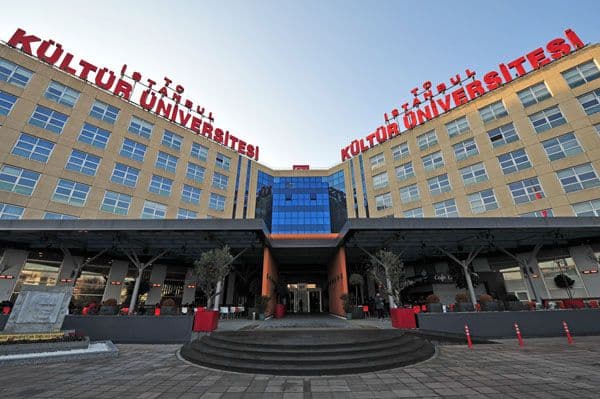


Istanbul Kultur University (IKU) is one of Istanbul's established private foundation universities, founded in 1997 by the Kultur College Education Foundation (KEV). Starting from 157 students and 32 academic staff in its first year, it has grown to serve over 13,000 students across four campuses on Istanbul's European side, with its main campus in Atakoy and additional sites in Basin Ekspres and Sirinevler. Structured across eight faculties covering Engineering and Natural Sciences, Architecture, Health Sciences, Business, Law, Arts and Design, Arts and Sciences, and Education, IKU holds membership in the European University Association (EUA), the International Association of Universities (IAU), and as of 2026 the Balkan Universities Association.
For international applicants, the institution is probably best understood through three lenses: its multi-body program accreditation portfolio, its recent EU Horizon Europe research project, and its competitive fee positioning relative to comparable accredited Istanbul private universities.
Accreditation Profile and Engineering Credentials
On accreditation, IKU holds MÜDEK accreditation with the EUR-ACE European Engineering Accreditation label for its engineering programs, MIAK accreditation for Architecture, FEDEK accreditation for the Faculty of Sciences, and Pearson accreditation for the School of Foreign Languages. That's four independent faculty-level accreditations, a broader multi-body profile than most similarly-sized Istanbul private universities carry. The EUR-ACE label is specifically recognised by the Pakistan Engineering Council (PEC) for engineering graduates targeting professional practice in Pakistan, a concrete post-graduation advantage for applicants from that market. For graduates targeting professional engineering registration in EU member states, EUR-ACE is the relevant European-standard credential.
A 2023 study published in Education for Chemical Engineers examining EUR-ACE accreditation processes found that institutions achieving EUR-ACE status demonstrate compliance with rigorous European quality benchmarks, with the accreditation process itself driving measurable improvements in curriculum design, teaching standards, and alignment with European professional engineering requirements. Separately, a 2020 study published in Higher Education with 60 citations examining international student mobility and labour market outcomes found that the international prestige hierarchies signalled through credentials like European accreditation directly affect early career outcomes for internationally mobile graduates. IKU's EUR-ACE plus MIAK plus FEDEK profile directly maps onto the institutional characteristics that both studies identify as material for engineering and architecture career outcomes.
Horizon Europe Research and Recent Developments
On research, the development worth paying attention to is the Spectroscopy@IKU project, funded under the European Union's Horizon Europe WIDERA ERA-Chairs programme with a total budget of €2.5 million. It's the first and only ERA-Chair project in Turkey funded under the HORIZON-WIDERA-2023-TALENTS-01 call. The project established the IKU-SPECTRA Molecular Sciences and Spectroscopy Applied Research Centre, Turkey's first facility equipped with matrix isolation spectroscopy infrastructure alongside advanced Raman, infrared, ultraviolet/visible spectroscopies, and diffraction techniques. The 1st IKU-SPECTRA International Congress on Spectroscopy (ICS 2026), held on 21–22 May 2026, brought together speakers including 2019 Nobel Laureate in Physics Prof. Didier Queloz, internationally recognised physical chemist Prof. Peter Atkins, and ERA Chair Holder Prof. Rui Fausto of the University of Coimbra. Hosting a Nobel laureate at a research congress is not a standard feature of Istanbul private university programming, and it reflects the level of the ERA-Chair appointment and the international research network IKU has connected to through this project.
Separately, a faculty member from the Civil Engineering department was granted a patent in 2025 for a method for calculating plate movements in fault-surrounded regions. Ten IKU student teams advanced to the finals of TEKNOFEST 2025, one of Turkey's largest technology competitions, competing under the IEEE IKU Student Club. The university additionally contributed to the United Nations Global Food Systems and SDGs Report 2025 through its Sustainable Development Centre (SURKAM).
Istanbul Kultur University Fees for International Students in 2026–2027
For the 2026–2027 academic cycle, IKU fees for international students start from approximately $3,000 per year for most standard undergraduate bachelor's programs, with Architecture in English at approximately $4,500 per year. Engineering, Computer Science, and Social Sciences programs in English run in the $3,000 to $4,000 range. Associate degree programs are priced at approximately $2,250 per year. Master's programs including MSc Computer Engineering and MBA are documented at approximately $4,000 per year, a competitive rate within Istanbul's private postgraduate market. Discounts of up to 50% are available for eligible students based on merit and early application timing, per IKU's scholarships and discounts page. No application fee is charged.
University | Engineering Fees/yr (USD) | MÜDEK + EUR-ACE | QS Western Asia 2026 | Horizon Europe Project |
|---|---|---|---|---|
Istanbul Kultur University | ~$3,000–$4,000 | Yes (both) | 79th | Yes (ERA-Chair, €2.5M) |
Isik University | ~$4,800 | Yes (EUR-ACE) | 131st | Not documented |
Kadir Has University | ~$6,000 | Yes (MÜDEK) | 45th | Not documented |
Bahcesehir University | ~$8,500–$9,000 | Partial | Not ranked | Not documented |
Istanbul Kultur (Architecture) | ~$4,500 | MIAK | 79th | Yes |
Academic Programs and Faculty Structure
The academic portfolio across eight faculties is broader than many comparably priced Istanbul private universities. Engineering programs in Computer, Software, Civil, Electrical-Electronics, and Industrial Engineering are all available in English with MÜDEK and EUR-ACE accreditation. Architecture and Interior Architecture and Environmental Design run with MIAK accreditation. The IKU Design Factory accepts applications each semester for applied design project programs. Over 50 laboratories and research centres support the academic and research activities across the campus network. A structurally distinctive feature is the Dual Major Program (DMP), which allows qualified undergraduate students to pursue two bachelor's degrees simultaneously, uncommon among Turkish private universities and adding significant academic value without additional tuition beyond the standard program fee.
Admission Requirements for International Applicants
International undergraduate applicants need a high school diploma with certified translation, full academic transcripts, a valid passport copy, and English proficiency via IELTS, TOEFL, or equivalent for English-medium programs, per IKU's international FAQ. A Turkish proficiency certificate is required for Turkish-medium tracks. Where external certificates are unavailable, IKU provides a preparatory language track for students needing English foundation support. Both Fall and Spring 2026–2027 intakes are documented as open. No application fee is charged.
International students can apply to IKU alongside other Istanbul university options simultaneously through Global Degrees Network at universityapply.org/students/apply, completely free of charge. Our portal is integrated directly with IKU and dozens of other Turkish institutions, so you can compare programs, submit multiple applications in one session, and have our team handle document review, submission, and follow-up. Admission guaranteed.
Erasmus+ and International Mobility
Erasmus+ participation covers over 100 international cooperation agreements with European partner institutions, with ECTS credit transfer under Bologna Process frameworks. EUA and IAU memberships provide broader institutional academic collaboration access. Full details on partnerships and outbound mobility programs are available at the IKU International Office.
Summary Assessment for International Applicants
For international applicants evaluating Istanbul's private engineering and architecture landscape in 2026–2027, IKU's MÜDEK plus EUR-ACE plus MIAK plus FEDEK multi-accreditation profile, active EU Horizon Europe ERA-Chair research project, QS Western Asia 79th position, and undergraduate engineering fees of $3,000 to $4,000 per year position it as one of the stronger accreditation-to-cost ratios among Istanbul private universities, particularly for applicants in engineering, architecture, or sciences where program-level credentials directly affect post-graduation professional practice options.
Four Accreditations, EU Horizon Research, $3,000 Tuition, Apply Free Through Global Degrees Network
Istanbul Kultur University holding MÜDEK, EUR-ACE, MIAK, and FEDEK accreditations simultaneously, while running Turkey's first and only ERA-Chair project under Horizon Europe at engineering fees starting $3,000 per year is one of the clearest accreditation-to-cost matches in Turkey's private university market. Global Degrees Network works closely with engineering and architecture applicants where European credential recognition matters for post-graduation career paths, and IKU consistently emerges as a priority comparison point for that profile. Apply free through universityapply.org/students/apply our portal integrates directly with IKU and dozens of other Turkish universities, so you can shortlist, compare fees and accreditations, and submit multiple applications in one place. Zero fees at any stage, guaranteed admission outcome, and full support from your acceptance letter through to arrival in Istanbul.
One quick correction before the data: the source text references "Kadir Has University" in the local ranking section, but this article is about Istanbul Kultur University. The content below covers IKU's verified 2026 ranking positions across all relevant methodologies.
Istanbul Kultur University holds a ranking profile that varies meaningfully across different methodologies, and understanding which framework is most relevant depends on what an applicant is actually trying to assess. The headline global positions are mid-range. But the regional and subject-specific figures are stronger, and the research infrastructure developments in 2025–2026, particularly the EU Horizon Europe ERA-Chair project, are likely to improve citation-weighted positions in coming cycles.
QS Europe University Rankings 2026 place IKU 79th in Western Asia and in the 701–900 band across Europe. The Western Asia 79th position is its strongest QS regional indicator and reflects IKU's recognition across the broader geographic academic market that most Istanbul private universities compete within. Times Higher Education World University Rankings 2026 place the institution in the 1,501+ global band, with inclusion in THE Impact Rankings reflecting performance against UN Sustainable Development Goal criteria, consistent with the university's SURKAM Sustainable Development Centre activities and its contribution to the UN Global Food Systems and SDGs Report 2025.
EduRank 2026 places IKU 64th in Turkey out of 175 universities and 3,144th globally, based on composite research output. Subject-level EduRank data documents the university at 99th in Turkey and 3,413th globally for Engineering, with Electrical Engineering, Materials Science, Optical Engineering, Telecommunications, and Computer Networking as leading research subfields. Liberal Arts and Social Sciences sits at 104th in Turkey and 3,011th globally, with Philosophy, Political Science, Law, and Linguistics as primary contributors. Operations Research holds a global position of 1,034th out of 2,326 tracked institutions, a specific niche strength reflecting the Engineering faculty's applied mathematics output.
SCImago Institutions Rankings 2025–2026 place IKU at 1,624th globally, with a 19th position in specific Turkish meta-ranking categories. That SCImago figure reflects research productivity and citation impact weighted toward engineering and applied sciences, consistent with IKU's faculty profile. Webometrics January 2026 documents a global position of 4,256th and 138th in Turkey, reflecting digital academic presence and web visibility. URAP ranks the university 161st among Turkish universities based on its academic performance index.
The EU Horizon Europe Spectroscopy@IKU ERA-Chair project, with a total budget of €2.5 million and the distinction of being the first and only ERA-Chair project in Turkey funded under the HORIZON-WIDERA-2023-TALENTS-01 call, is a research infrastructure development that citation-weighted ranking systems will register over time as the IKU-SPECTRA centre generates publications and patents. The 1st IKU-SPECTRA International Congress on Spectroscopy (ICS 2026), held in May 2026 with 2019 Nobel Physics Laureate Prof. Didier Queloz among the speakers, signals the international calibre of the research network IKU has connected to through this project. Ten IKU student teams advancing to the TEKNOFEST 2025 finals additionally reflects applied engineering capability at student level, not just faculty research output.
University | QS Western Asia 2026 | EduRank Turkey 2026 | SCImago Global | Webometrics Turkey |
|---|---|---|---|---|
Istanbul Kultur University | 79th | 64th | 1,624th | 138th |
Kadir Has University | 45th | ~100th | ~2,985th | ~121st |
Isik University | 131st | 82nd | Not top 2000 | ~121–129th |
Istanbul Bilgi University | Not ranked | ~100th+ | Not top 2000 | ~20th |
Istanbul Bilkent | Top 20 | Top 20 | Top 500 | Top 20 |
So the honest summary of IKU's ranking profile in 2026–2027 is this: its strongest positions are in QS Western Asia 79th, EduRank 64th in Turkey, and SCImago 19th in specific Turkish categories, all reflecting a research output profile concentrated in engineering and applied sciences. The absolute global band positions across THE and Webometrics are mid-range for an established Istanbul private university, but the EU Horizon Europe ERA-Chair research infrastructure, TEKNOFEST student competition performance, and Civil Engineering faculty patent grant are active indicators of a research trajectory pointing upward rather than static. For applicants choosing IKU based on ranking, the QS Western Asia position and EduRank national standing are the most relevant current benchmarks.
Istanbul Kultur University fees for international students are structured by faculty, program, and language of instruction, and they sit in a genuinely competitive range for a multi-accredited Istanbul private university with EU Horizon Europe research involvement and MÜDEK plus EUR-ACE engineering credentials.
For the 2026–2027 academic cycle, standard undergraduate bachelor's programs start from approximately $3,000 per year for most faculties in English-medium delivery. Architecture in English is documented at approximately $4,500 per year. Engineering, Computer Science, and Social Sciences programs in English run generally in the $3,000 to $4,000 per year range. Turkish-medium programs carry lower rates. Associate degree programs are priced at approximately $2,250 per year, with some lower-cost associate tracks starting from $1,670 per year, placing them among the more accessible two-year options in Istanbul's private university sector.
Those figures are notably lower than what many older listings circulate. For applicants comparing IKU against mid-tier Istanbul alternatives charging $5,000 to $8,000 for similar English-medium engineering or business programs, that fee differential is real and significant, particularly when IKU's engineering programs carry MÜDEK and EUR-ACE accreditation that many higher-priced alternatives don't hold.
At graduate level, master's programs including MSc Computer Engineering and MBA are documented at approximately $4,000 per year, competitive within Istanbul's private postgraduate market. Doctoral fees run from approximately $3,600 to $6,000 per year depending on research field and faculty.
Discounts of up to 50% are available for eligible students based on merit and early application timing. A sibling discount is also documented for simultaneously enrolled siblings. At the 50% discount level, engineering programs drop to approximately $1,500 to $2,000 per year, placing IKU among the most cost-accessible MÜDEK-accredited engineering options in Istanbul at that scholarship band. Scholarship eligibility depends on academic profile and program, so applicants should ask specifically about current availability during the application process rather than assuming a standard rate applies automatically.
One structural feature worth factoring into the financial calculation is the Dual Major Program (DMP). Qualified undergraduate students can pursue two bachelor's degrees simultaneously without paying additional tuition beyond the standard program fee. That's an uncommon offering among Turkish private universities and adds measurable academic value for students who want combined credentials in, say, Computer Engineering and Business Administration, or Architecture and Interior Design, without doubling the cost.
No application fee is charged for international student submissions. Payment plans are available on a semester basis, allowing students to split annual tuition across two installments rather than paying the full year upfront. Both Fall and Spring 2026–2027 intakes are open.
Beyond tuition, realistic monthly living costs in Istanbul for 2026–2027 run from approximately $400 to $700 depending on accommodation type and lifestyle. The Atakoy main campus sits on Istanbul's European coast, well connected by metro and bus, with housing costs in surrounding districts manageable relative to central commercial areas like Besiktas or Taksim. Mandatory health insurance runs approximately $150 to $300 per year, required for the Turkish residence permit process.
All fee figures for 2026–2027 should be confirmed directly with IKU's International Office before submitting any payment, since annual adjustments apply across faculties and English-medium and Turkish-medium rates differ within the same program.
Istanbul Kultur University offers an extensive array of programs across various faculties, focusing on equipping students with the essential knowledge and skills necessary for successful careers. The university emphasizes a blend of theoretical learning and practical application.
Faculty of Business Administration: This faculty is committed to providing students with a solid foundation in business principles. Key programs include:
Business Administration: This program encompasses fundamental business concepts such as marketing, finance, and management, preparing students for diverse roles within the corporate world.
International Business: This program emphasizes global trade and economic strategies, equipping students to navigate the complexities of international markets.
Faculty of Engineering and Architecture: This faculty offers diverse programs designed to prepare students for various engineering fields. Key programs include:
Computer Engineering: Covering software development, networking, and cybersecurity, this program prepares graduates for successful careers in the technology sector.
Civil Engineering: Students learn about structural design, construction management, and sustainable practices, equipping them to tackle real-world engineering challenges.
Faculty of Law: The Faculty of Law provides a comprehensive education in legal principles and practices. Key programs include:
Law: This program equips students with essential skills for a successful legal career, focusing on both theoretical knowledge and practical application.
Faculty of Communication: This faculty encompasses programs that explore media, public relations, and advertising. Key programs include:
Public Relations and Advertising: Students learn about strategic communication and marketing techniques, preparing them for careers in media and public relations.
Faculty of Arts and Design: This faculty focuses on creative disciplines, offering programs that emphasize artistic expression and design thinking. Key programs include:
Graphic Design:This program develops students’ skills in visual communication, preparing them for careers in various design fields.
Istanbul Kultur University actively welcomes international students and has established a straightforward admission process to facilitate applications from diverse backgrounds. The university is committed to fostering a multicultural academic environment.
Undergraduate Admission Requirements:
High School Diploma: Applicants must possess a recognized high school diploma or its equivalent.
English Language Proficiency: Non-native English speakers are required to demonstrate proficiency through standardized tests such as TOEFL or IELTS. The university may also offer English preparatory courses for students needing additional language support.
Academic Transcripts: Official transcripts from high school detailing academic performance are required.
Graduate Admission Requirements:
Bachelor’s Degree: Applicants to graduate programs must hold a relevant bachelor’s degree from an accredited institution.
English Proficiency: Proof of English language proficiency is required for all English-taught graduate programs.
Statement of Purpose: A personal statement outlining the applicant’s academic interests and career goals is often required.
Letters of Recommendation: Some programs may request letters of recommendation from academic or professional references.
Application Documents: International applicants are typically required to submit the following documents:
Completed online application form
Academic transcripts
English language proficiency certificates
Personal statement
Copy of passport
Visa Requirements: Once accepted, international students must apply for a student visa. This process generally requires submitting the acceptance letter from Istanbul Kultur University and proof of sufficient financial resources to cover tuition and living expenses.
Istanbul Kultur University is committed to maintaining high educational standards, which is reflected in its national and international accreditations. These recognitions ensure that the university's academic programs are respected and recognized both in Turkey and globally.
National Accreditation: IKU is accredited by the Turkish Higher Education Council (YÖK), guaranteeing that its programs meet the necessary national standards for quality education. This accreditation ensures that degrees awarded by Istanbul Kultur University are recognized throughout Turkey, significantly enhancing the credibility of the education students receive.
International Collaborations: The university actively seeks partnerships with various international institutions, facilitating joint research projects, academic exchanges, and collaborative programs. These collaborations enhance the university’s academic offerings and provide students with valuable opportunities to gain international experience.
Recognition in Health Sciences and Engineering:Istanbul Kultur University has earned accolades for its health sciences and engineering programs. The university’s emphasis on practical training and innovative research initiatives ensures that its graduates are well-prepared for the workforce, enhancing their employability both locally and internationally.
Istanbul Kultur University provides a modern and well-equipped campus designed to support students' academic and personal development. The university strives to create an environment that fosters learning, collaboration, and innovation.
Libraries and Study Areas: The university’s library serves as a vital academic resource, offering a comprehensive collection of books, academic journals, and digital materials. Key features include:
Quiet Study Zones: Designed for focused individual study.
Group Study Rooms: Available for collaborative projects, facilitating teamwork and discussion.
Digital Resources: Access to online databases and e-books to support research and learning.
Laboratories and Research Facilities: Istanbul Kultur University is equipped with advanced laboratories and research centers that provide students with practical learning opportunities, particularly in health sciences and engineering. These facilities include:
Medical Simulation Labs: Allowing students to practice clinical skills in a controlled environment.
Engineering Labs: Providing access to the latest technology and equipment for hands-on projects.
Sports and Recreational Facilities: The university encourages students to maintain a healthy lifestyle through various sports and recreational activities. Facilities include:
Fitness Centers: Equipped with modern exercise equipment and fitness programs tailored to student needs.
Sports Courts: Areas for basketball, football, and other sports, promoting physical activity and teamwork.
Dining Services: Istanbul Kultur University offers a variety of dining options to cater to different dietary preferences. Students can enjoy nutritious and affordable meals in campus cafeterias, which serve as social gathering spots for the university community.
Student Support Services: The university is dedicated to ensuring student success through a range of support services, including:
Academic Advising: Advisors assist students in course selection, academic planning, and personal development.
Career Services: The university provides resources for job placement, internships, and career counseling, helping students prepare for the workforce.
Counseling and Wellness Services: Mental health support and wellness programs are available to help students manage stress and personal challenges.
Housing and Accommodation: Istanbul Kultur University offers modern accommodation options for students who choose to live on campus. The dormitories provide:
Private and Shared Rooms: Available options to suit different budgets and preferences.
Common Areas: Spaces for studying and socializing, fostering a sense of community among residents.
Transportation Services: The university is conveniently located and well-connected to public transportation networks, making it easy for students to commute. Shuttle services are also provided, offering convenient access to key locations within the city.
Istanbul Kultur University is committed to offering a transformative educational experience that combines academic rigor with practical training. The university's mission is guided by several core values:
Academic Excellence: The university strives to maintain high standards in education, ensuring that students receive quality instruction and training that prepares them for their careers.
Innovative Learning: Istanbul Kultur University emphasizes innovation in teaching and learning, incorporating the latest educational technologies and methodologies into its programs.
Global Engagement: The university promotes a global perspective in education, encouraging students to engage with international partners and participate in exchange programs that broaden their horizons.
Research and Development: Istanbul Kultur University supports research initiatives that contribute to advancements in healthcare and social sciences, fostering a culture of inquiry and discovery among students and faculty.
Student-Centered Focus: The university prioritizes the needs of its students, offering comprehensive support services to ensure their academic and personal success.
Community Engagement: Istanbul Kultur University encourages students to actively participate in community service and social responsibility initiatives, promoting ethical leadership and civic engagement.
Istanbul Kultur University offers numerous advantages for students seeking a high-quality education in health and social sciences. The university's focus on academic excellence, practical training, and global collaboration ensures that students are well-prepared for successful careers. Here are some key benefits of studying at Istanbul Kultur University:
Specialization in Health and Social Sciences: The university is particularly recognized for its specialized programs in healthcare and social sciences, providing students with in-depth knowledge and practical skills.
Competitive Tuition Fees: With affordable tuition rates, Istanbul Kultur University makes quality education accessible to a wide range of students. The availability of scholarships further enhances this accessibility.
Modern Facilities: Students have access to state-of-the-art facilities, including advanced laboratories and simulation centers that enhance their learning experience and prepare them for practical work.
International Opportunities: The university’s global partnerships provide students with opportunities for international study, internships, and collaborative research projects that broaden their educational experience.
Strong Industry Connections: Istanbul Kultur University maintains close ties with healthcare providers and industry leaders, ensuring students gain valuable insights and experiences that enhance their employability.
Comprehensive Student Support: The university offers a wide range of support services, including academic advising, career counseling, and wellness programs, to help students navigate their educational journey successfully.
Strategic Location in Istanbul: Located in one of the most vibrant cities in the world, Istanbul Kultur University provides students with access to numerous professional, cultural, and social opportunities.
Istanbul Kultur University actively promotes international collaboration and student mobility through its exchange programs and participation in the ERASMUS initiative. These programs offer students valuable opportunities to gain global experience and broaden their academic horizons.
Student Exchange Programs: Istanbul Kultur University has established partnerships with various universities across Europe and beyond, allowing students to participate in exchange programs. These programs enable students to study at partner institutions for a semester or an academic year, gaining exposure to different educational systems and cultures.
ERASMUS+ Program: As part of the ERASMUS+ program, Istanbul Kultur University offers students the chance to study abroad at one of its partner universities in Europe. The ERASMUS+ program provides financial support and ensures that courses taken abroad are credited toward the student’s degree at Istanbul Kultur University. Benefits of the program include:
Cultural Immersion: Students experience life in a different country, gaining insights into new cultures and languages.
Academic Flexibility: Credits earned during the exchange are recognized by the university, allowing students to maintain their academic progress.
Financial Assistance: The ERASMUS+ program offers funds to help cover travel and living expenses, making international study more accessible to students.
Global Partnerships: Istanbul Kultur University’s extensive network of global partners enhances its academic offerings and provides students with diverse opportunities for study and collaboration.
Application Process for Exchange Programs:Students interested in participating in exchange or ERASMUS programs must meet specific eligibility requirements, such as maintaining good academic standing and demonstrating language proficiency. The application process typically includes submitting an application form, academic transcripts, and a personal statement outlining the student’s motivation for studying abroad.
What programs does Istanbul Kultur University offer? The university offers a wide range of undergraduate and graduate programs in fields such as health sciences, engineering, business administration, social sciences, and law.
What are the tuition fees at Istanbul Kultur University? Kultur University tuition fees for international students for undergraduate programs generally range from €3,500 to €9,000, while graduate programs typically cost between €5,000 and €12,000 annually. The university also provides various scholarships to support students.
What are the admission requirements for international students? International applicants must submit a completed application form, academic transcripts, proof of English proficiency, and other relevant documents, including a personal statement and letters of recommendation.
Is on-campus accommodation available? Yes, Istanbul Kultur University offers modern on-campus housing options for students, providing a comfortable and supportive living environment.
What student support services are available? The university provides a range of support services, including academic advising, career counseling, and mental health support, to ensure that students succeed both academically and personally.
What career opportunities are available to graduates? Graduates from Istanbul Kultur University are well-regarded in their respective fields, particularly in healthcare and social sciences, thanks to the university’s emphasis on practical training and industry connections.
How can students apply for exchange programs? Students interested in exchange programs should contact Istanbul Kultur University’s international office for detailed information on eligibility criteria and application procedures.
What are the living costs in Istanbul? Living costs in Istanbul can vary, but students should budget between €500 and €1,000 per month for expenses, including accommodation, food, and transportation.